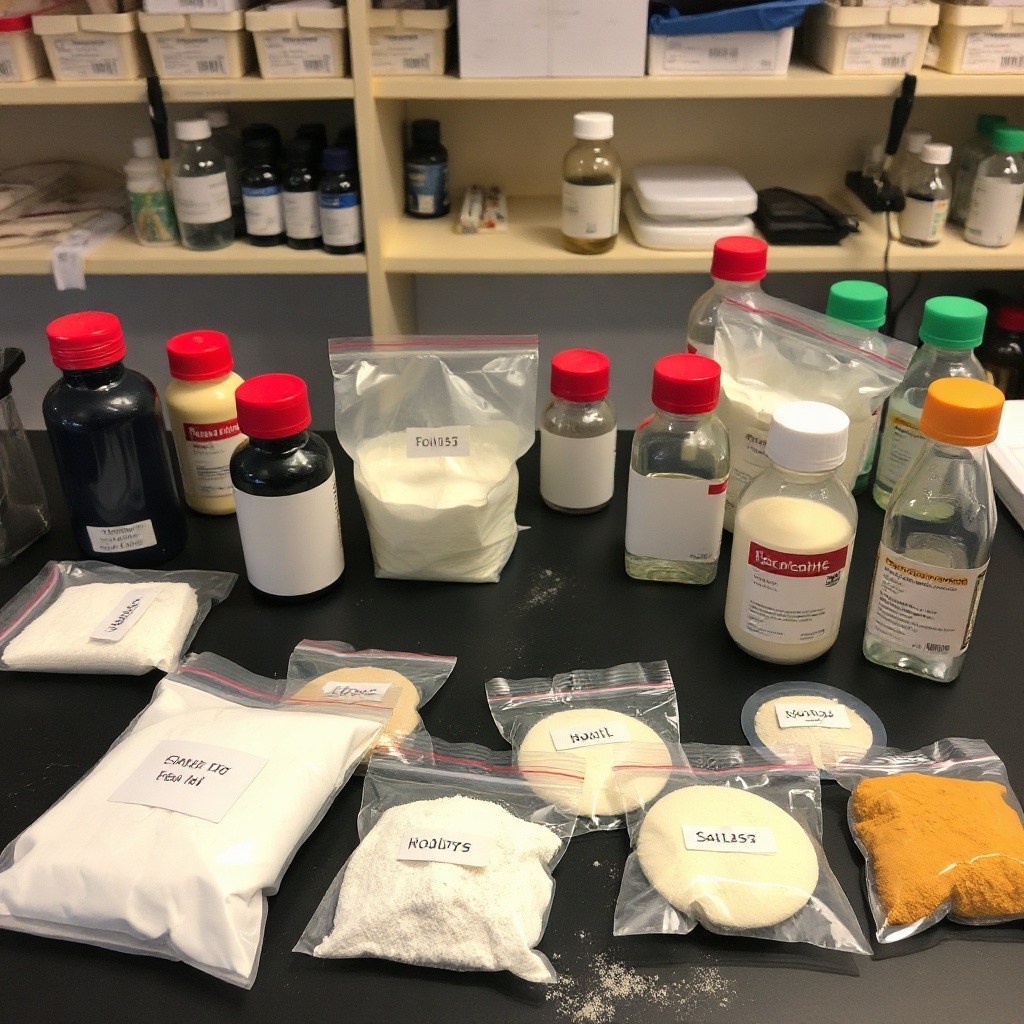
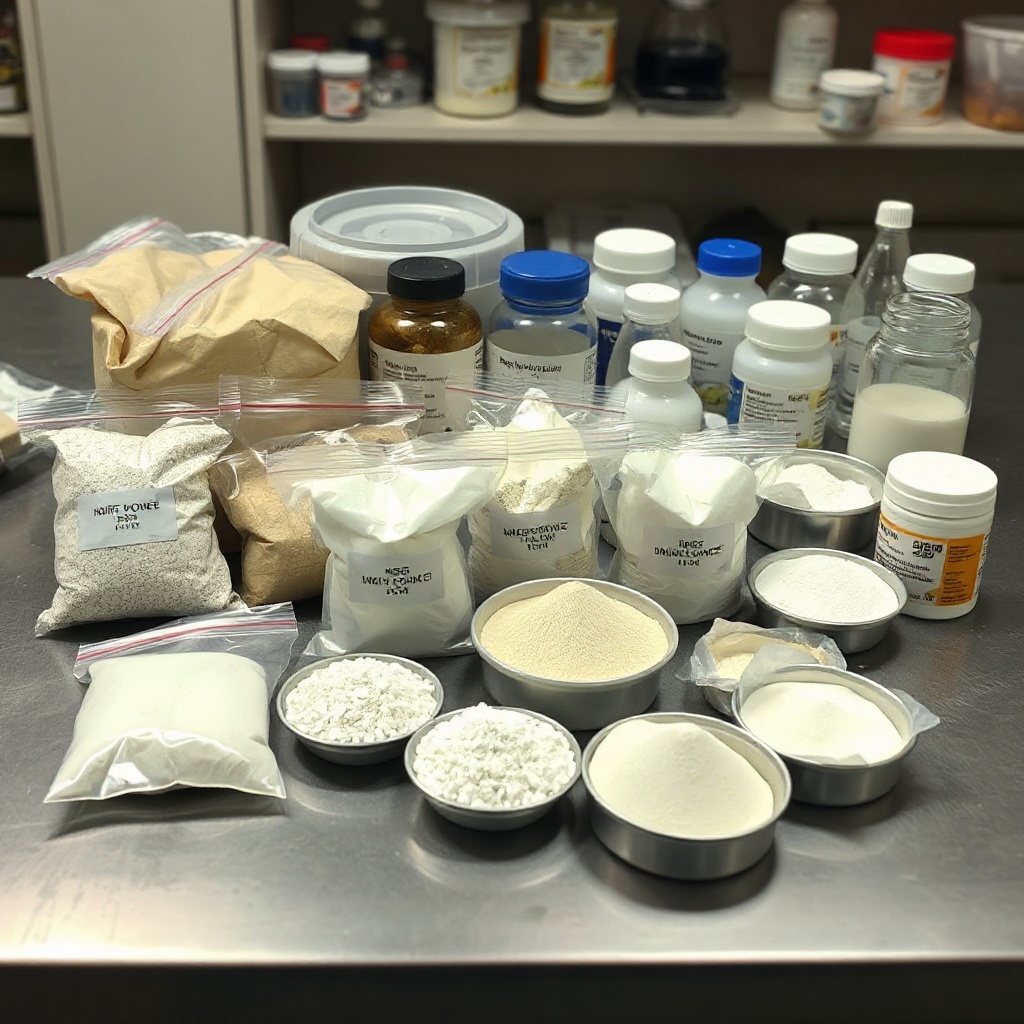
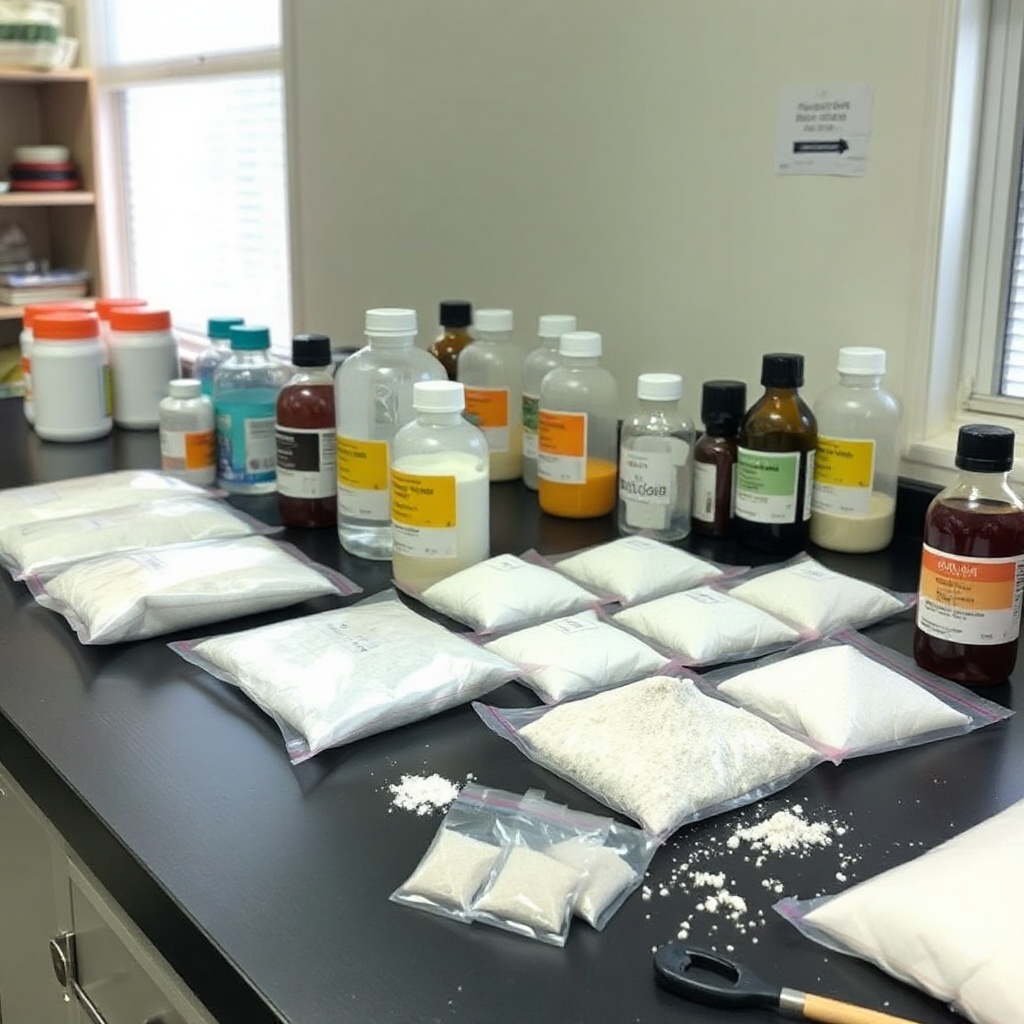
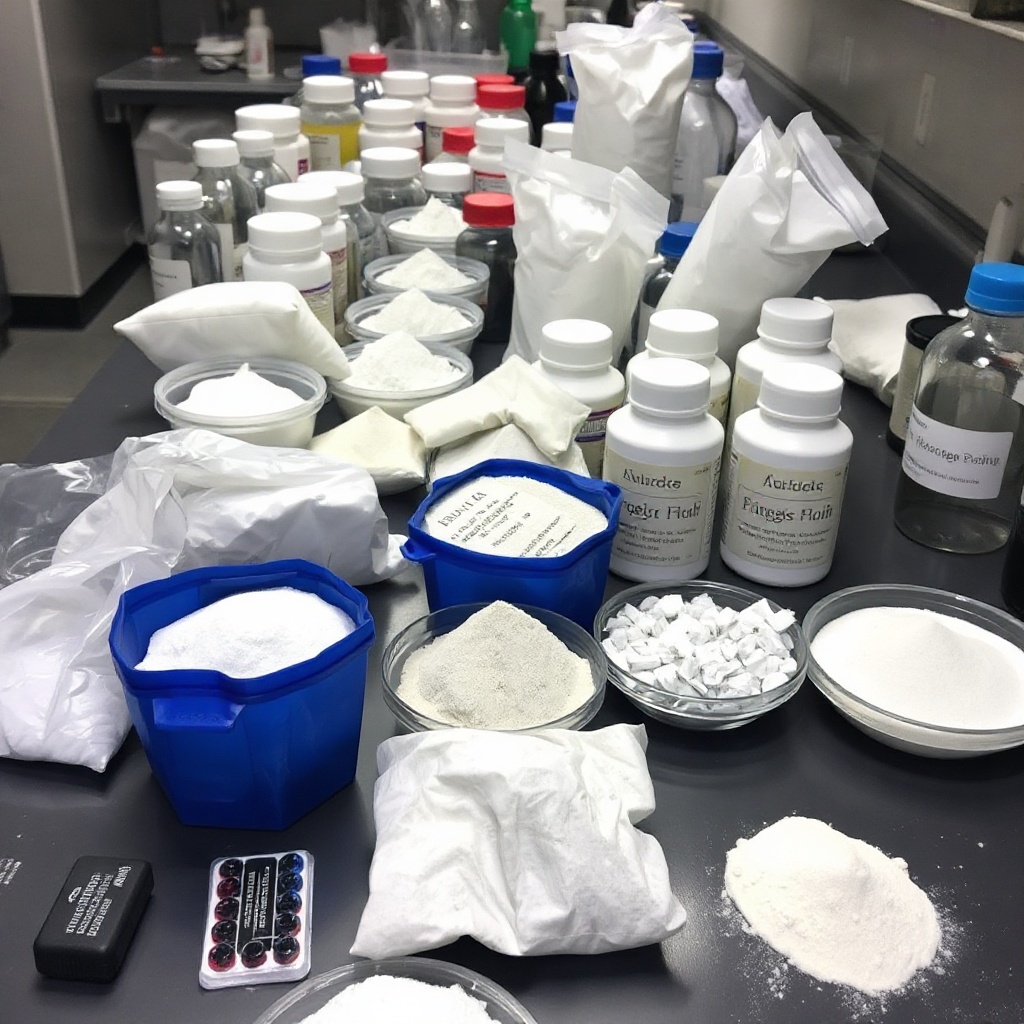
Unknown Powder Analysis
Not sure which analysis your powder needs?
Based on the information you provide above, our technical team will review your sample and recommend the most appropriate analytical program for your specific objective.
Depending on the sample, this may include XRD, XRF, SEM/EDS, Particle Size Analysis (PSD), FTIR, TGA or other analytical techniques.
From $695 AUD + GST. Final pricing will be confirmed after technical review.
You don’t need to choose the tests yourself — just tell us what you want to find out.
Starting from AUD $695 + GST.
Description
Identify Unknown Powders, Minerals, Fillers & Contaminants
Have you received a powder from a supplier but are not sure exactly what it contains?
Are two powders supplied under the same product name performing differently?
Do you need to identify an unknown mineral, filler, construction powder, pigment, additive or contaminant?
Labsure provides independent unknown powder analysis and material characterisation for Australian businesses.
We combine analytical techniques such as FTIR, XRD, XRF, SEM/EDS, particle size analysis (PSD) and TGA to investigate the composition, structure, particle characteristics and other properties of your sample.
From $695 AUD + GST
Typical turnaround: 15–20 business days
You don’t need to know which test you need.
Tell us what you are trying to find out, and our technical team will recommend an appropriate analytical program.Please fill out the form above
What Can We Help You Find Out?
A powder can look simple, but its performance may depend on its mineral composition, particle size, morphology, organic content and trace elements.
Our analysis can help answer questions such as:
What is this material?
We can use techniques such as FTIR and XRD to help identify organic materials, polymers, minerals and crystalline phases.
What minerals are present?
XRD and XRF can help characterise mineral phases and elemental composition in many inorganic powders.
What are these particles?
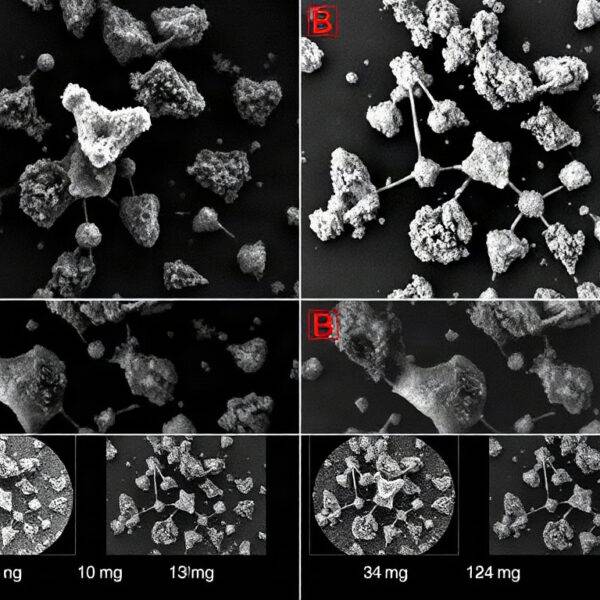
SEM/EDS can provide high-resolution images of particle morphology together with elemental information.
How fine is the powder?
Particle Size Distribution (PSD) can provide parameters such as D10, D50 and D90, helping you understand the particle size distribution.
How much organic and inorganic material is present?
TGA can help evaluate mass loss, thermal decomposition behaviour and approximate organic/inorganic fractions in suitable materials.
What organic compounds may be present?
For suitable samples, GC-MS, HPLC or LC-MS/MS may be considered to investigate organic components.
What Can We Learn From Your Powder?
01 — Particle Size Distribution (PSD)
How fine is the powder?
PSD analysis measures how particle sizes are distributed within a powder.
Depending on the method and sample, results may include:
- D10
- D50 (median particle size)
- D90
- Particle size distribution curve
Why does it matter?
Particle size can influence:
- Powder flowability
- Dispersion
- Surface area
- Mixing behaviour
- Coating performance
- Reactivity
- Final product consistency
Example:
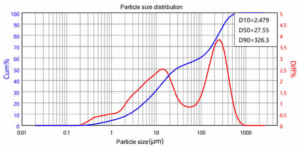
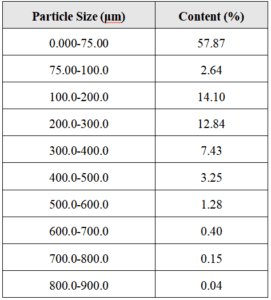
A supplier may describe two materials simply as “fine calcium carbonate”, but PSD analysis may show significantly different D50 and D90 values.
This can help explain why apparently identical raw materials behave differently in a formulation.
02 — SEM / EDS
What do the particles actually look like?
Scanning Electron Microscopy (SEM) can provide detailed images of individual particles and their morphology.
EDS can provide information about the elements associated with selected particles or areas.
Results may help you assess:
- Particle shape
- Particle size and morphology
- Surface characteristics
- Agglomeration
- Unusual particles
- Foreign particles
- Elemental composition
Example:
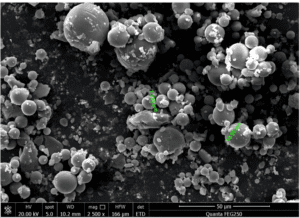
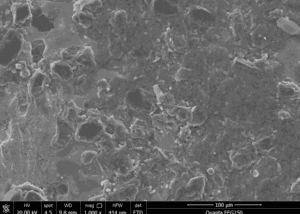
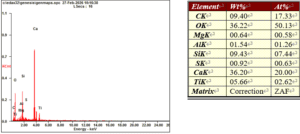
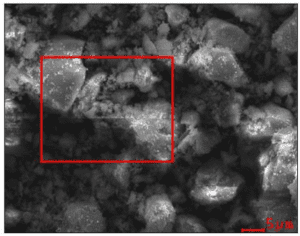
If your powder contains an unexpected black, white or metallic particle, SEM/EDS may help determine whether it is associated with a mineral, metal-containing contaminant or another inorganic material.
SEM/EDS is particularly useful when visual inspection alone cannot explain a powder problem.
03 — XRD
Which crystalline minerals are present?
X-Ray Diffraction (XRD) is particularly useful for identifying crystalline phases in mineral and inorganic powders.
Depending on the sample, XRD may help identify materials such as:
- Quartz
- Calcite
- Dolomite
- Gypsum
- Feldspar
- Other crystalline mineral phases
Example applications
Construction materials
Microcement · cement · mortar · concrete additives
Mineral powders
Quartz · silica-containing materials · calcium carbonate · mineral fillers
Ceramics
Ceramic powders · mineral raw materials
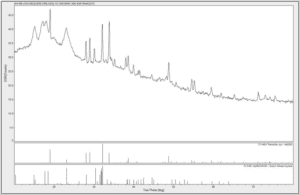
XRD can be particularly useful when you need to understand which crystalline phases are present rather than simply which elements are present.
04 — XRF
What elements are present?
X-Ray Fluorescence (XRF) can provide elemental composition information for many inorganic and mineral-based materials.
Depending on the sample, analysis may provide information about elements such as:
Si · Ca · Al · Fe · Mg · Na · K · Ti
and other detectable elements.
Why is this useful?
XRF can help with:
- Raw material verification
- Mineral characterisation
- Supplier comparison
- Identification of unexpected elemental components
- Quality control investigations
Example
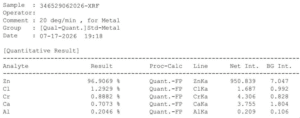
Two powders may both be described as mineral fillers, but their elemental profiles may be significantly different.
XRF can help identify these differences.
05 — FTIR
What type of material is this?
FTIR spectroscopy provides a chemical “fingerprint” based on infrared absorption.
It can be useful for screening and identifying many:
- Organic materials
- Polymers
- Resins
- Adhesives
- Coatings
- Rubber materials
- Organic additives
For suitable powders, FTIR may help determine whether an unknown material is consistent with a particular chemical or material type.
Example
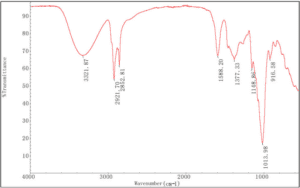
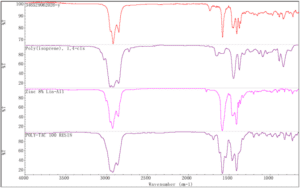
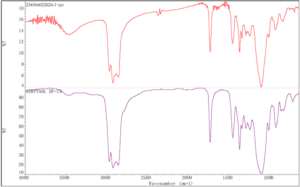
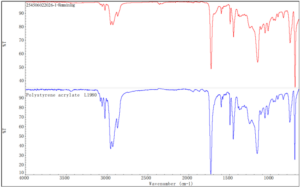
A powder supplied as a “polymer additive” may be compared against a known reference material to determine whether its FTIR profile is consistent with the expected material.
06 — TGA
How does the material behave when heated?
Thermogravimetric Analysis (TGA) measures changes in sample mass as temperature increases under controlled conditions.
Depending on the material, the results can help investigate:
- Moisture or volatile loss
- Thermal decomposition
- Organic material content
- Inorganic residue
- Thermal stability
Example
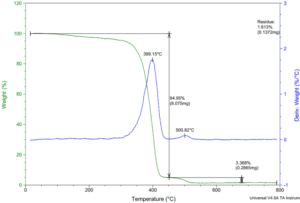
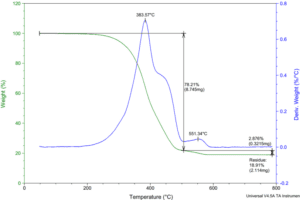
For a filled polymer or coating powder, TGA may help estimate the relative organic and inorganic fractions and identify different stages of thermal mass loss.
What Does the Final Result Look Like?
Your final analytical report may include, where applicable:
Sample Identification
Sample description, sample reference and analytical scope.
Analytical Results
Depending on the selected analytical program:
- FTIR spectrum
- XRD pattern
- XRF elemental results
- SEM images
- EDS elemental spectra
- Particle size distribution
- D10 / D50 / D90
- TGA curve
- Other analytical data where appropriate
Technical Interpretation
We don’t simply provide instrument outputs.
Where the analytical data allows, Labsure can provide an interpretation of what the results indicate about the sample and how the findings relate to your stated analytical objective.
One Sample Does Not Always Need Every Test
This is important.
We do not automatically perform every analytical technique on every powder.
The appropriate analytical methods depend on:
- The type of sample
- The information you need
- The suspected composition
- The sample quantity
- The complexity of the material
- Whether a reference or comparison sample is available
For example:
Unknown mineral powder
XRD + XRF + PSD
may be appropriate.
Unknown polymer powder
FTIR + TGA
may provide more useful information.
Powder containing unexpected particles
SEM/EDS + XRD/FTIR
may be considered.
Complex unknown formulation
Additional techniques such as GC-MS, HPLC, LC-MS/MS, ICP-OES or IC may be considered where appropriate.
You don’t need to decide which instrument to use. Labsure can help determine the analytical approach based on the question you need answered.
Who Is This Service For?
Our Unknown Powder Analysis service is suitable for Australian businesses working with:
- Construction materials
- Microcement and cement products
- Mineral fillers
- Quartz and silica-containing materials
- Paints and coatings
- Adhesives and sealants
- Plastics and polymers
- Ceramics
- Industrial chemicals
- Raw materials
- Manufacturing materials
- Imported materials
- Unknown contaminants or foreign particles
It can be particularly useful for businesses that need to verify imported raw materials, investigate product problems, compare suppliers or understand an unknown material before further formulation work.
Typical Questions We Help Answer
“My supplier says this is calcium carbonate. Can you verify it?”
We can recommend an analytical approach based on the sample and the level of verification required.
“Two suppliers sell me the same mineral powder, but they behave differently. Why?”
Comparative analysis using techniques such as XRD, XRF, PSD and SEM/EDS may help identify differences.
“There is an unexpected particle in my product. What is it?”
SEM/EDS, FTIR, XRD or other techniques may be considered depending on the particle.
“I have an old powder but no specification. Can you identify it?”
Yes. We can review the sample and determine an appropriate analytical program.
“I don’t know what test I need.”
That’s fine.
Simply tell us what you are trying to find out. We can review the information and recommend the appropriate analytical approach.
How Our Unknown Powder Analysis Works
1. Tell us about your sample
Submit your sample details, photos, existing specifications, SDS, COA or other available information.
2. We review your analytical objective
We focus on what you need to know, rather than simply selecting a standard test.
3. We recommend the analytical program
We select appropriate techniques based on the sample and your objective.
4. Receive a fixed quotation
You will receive a clear price and estimated turnaround before proceeding.
5. Send your sample
Once you approve the quotation, we provide sample submission instructions.
6. Analysis and technical report
Your sample is analysed using the agreed analytical program, followed by technical review and reporting.
Why Choose Labsure?
Problem-focused analysis
We start with your question, not the instrument.
Multiple analytical techniques
Our analytical capability includes FTIR, NMR, HPLC, GC-MS, LC-MS/MS, XRD, XRF, SEM/EDS, PSD, TGA, IC and ICP-OES, allowing different techniques to be considered for different sample types.
Suitable for Australian SMEs
You don’t need to maintain your own analytical laboratory or know which analytical technique to order.
Fixed quotation before testing
We review your requirements and confirm the analytical scope and price before proceeding.
Independent analytical investigation
Useful for raw material verification, product comparison, formulation investigation and material troubleshooting.
Pricing
Unknown Powder Analysis — From $695 AUD + GST
The final price depends on:
- Sample type
- Analytical objective
- Number and complexity of analytical techniques
- Sample preparation requirements
- Whether comparison samples are required
Typical turnaround: 15–20 business days.
Additional information
| What Can We Help You Find Out? | A powder can look simple, but its performance may depend on its mineral composition, particle size, morphology, organic content and trace elements. Our analysis can help answer questions such as: What is this material? We can use techniques such as FTIR and XRD to help identify organic materials, polymers, minerals and crystalline phases. What minerals are present? XRD and XRF can help characterise mineral phases and elemental composition in many inorganic powders. What are these particles? SEM/EDS can provide high-resolution images of particle morphology together with elemental information. How fine is the powder? Particle Size Distribution (PSD) can provide parameters such as D10, D50 and D90, helping you understand the particle size distribution. How much organic and inorganic material is present? TGA can help evaluate mass loss, thermal decomposition behaviour and approximate organic/inorganic fractions in suitable materials. What organic compounds may be present? For suitable samples, GC-MS, HPLC or LC-MS/MS may be considered to investigate organic components. |
|---|---|
| What Does the Final Result Look Like? | Your final analytical report may include, where applicable: Sample Identification Sample description, sample reference and analytical scope. Analytical Results Depending on the selected analytical program: FTIR spectrum We don't simply provide instrument outputs. Where the analytical data allows, Labsure can provide an interpretation of what the results indicate about the sample and how the findings relate to your stated analytical objective. |
| One Sample Does Not Always Need Every Test | We do not automatically perform every analytical technique on every powder. The appropriate analytical methods depend on: The type of sample For example: Unknown mineral powder XRD + XRF + PSD may be appropriate. Unknown polymer powder FTIR + TGA may provide more useful information. Powder containing unexpected particles SEM/EDS + XRD/FTIR may be considered. Complex unknown formulation Additional techniques such as GC-MS, HPLC, LC-MS/MS, ICP-OES or IC may be considered where appropriate. You don't need to decide which instrument to use. Labsure can help determine the analytical approach based on the question you need answered. |
| Who Is This Service For? | Our Unknown Powder Analysis service is suitable for Australian businesses working with: Construction materials It can be particularly useful for businesses that need to verify imported raw materials, investigate product problems, compare suppliers or understand an unknown material before further formulation work. |
| Typical Questions We Help Answer | "My supplier says this is calcium carbonate. Can you verify it?" We can recommend an analytical approach based on the sample and the level of verification required. "Two suppliers sell me the same mineral powder, but they behave differently. Why?" Comparative analysis using techniques such as XRD, XRF, PSD and SEM/EDS may help identify differences. "There is an unexpected particle in my product. What is it?" SEM/EDS, FTIR, XRD or other techniques may be considered depending on the particle. "I have an old powder but no specification. Can you identify it?" Yes. We can review the sample and determine an appropriate analytical program. "I don't know what test I need." That's fine. Simply tell us what you are trying to find out. We can review the information and recommend the appropriate analytical approach. |
| How Our Unknown Powder Analysis Works | 1. Tell us about your sample Submit your sample details, photos, existing specifications, SDS, COA or other available information. 2. We review your analytical objective We focus on what you need to know, rather than simply selecting a standard test. 3. We recommend the analytical program We select appropriate techniques based on the sample and your objective. 4. Receive a fixed quotation You will receive a clear price and estimated turnaround before proceeding. 5. Send your sample Once you approve the quotation, we provide sample submission instructions. 6. Analysis and technical report Your sample is analysed using the agreed analytical program, followed by technical review and reporting. |
| Why Choose Labsure? | Problem-focused analysis We start with your question, not the instrument. Multiple analytical techniques Our analytical capability includes FTIR, NMR, HPLC, GC-MS, LC-MS/MS, XRD, XRF, SEM/EDS, PSD, TGA, IC and ICP-OES, allowing different techniques to be considered for different sample types. Suitable for Australian SMEs You don't need to maintain your own analytical laboratory or know which analytical technique to order. Fixed quotation before testing We review your requirements and confirm the analytical scope and price before proceeding. Independent analytical investigation Useful for raw material verification, product comparison, formulation investigation and material troubleshooting. |