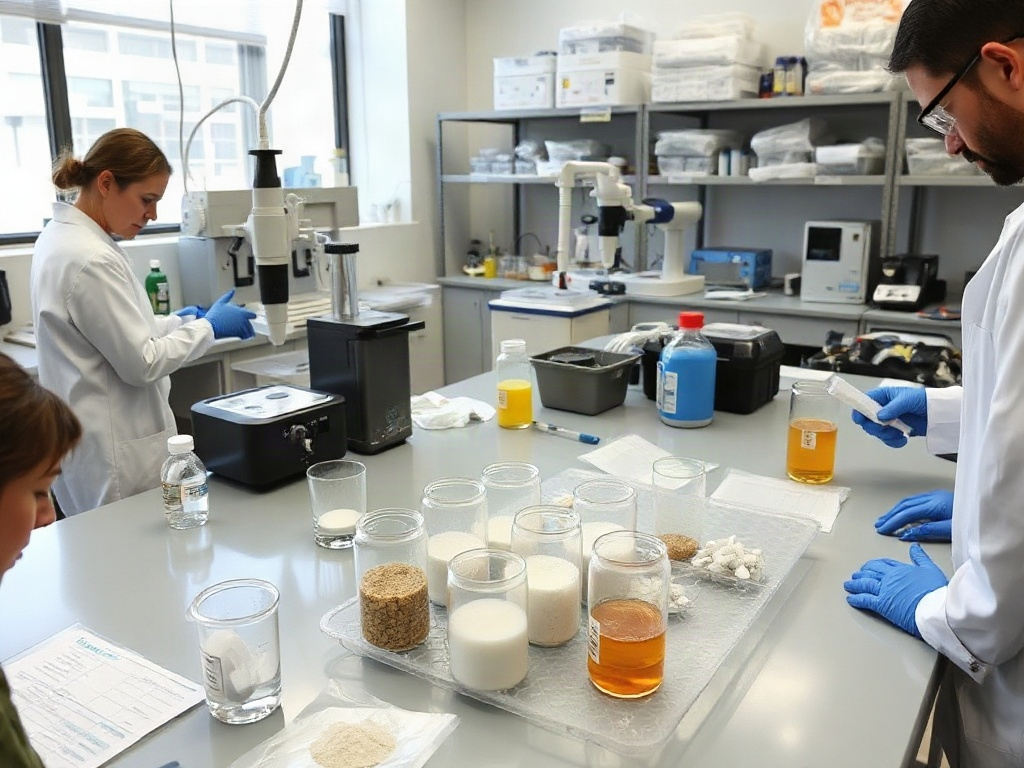
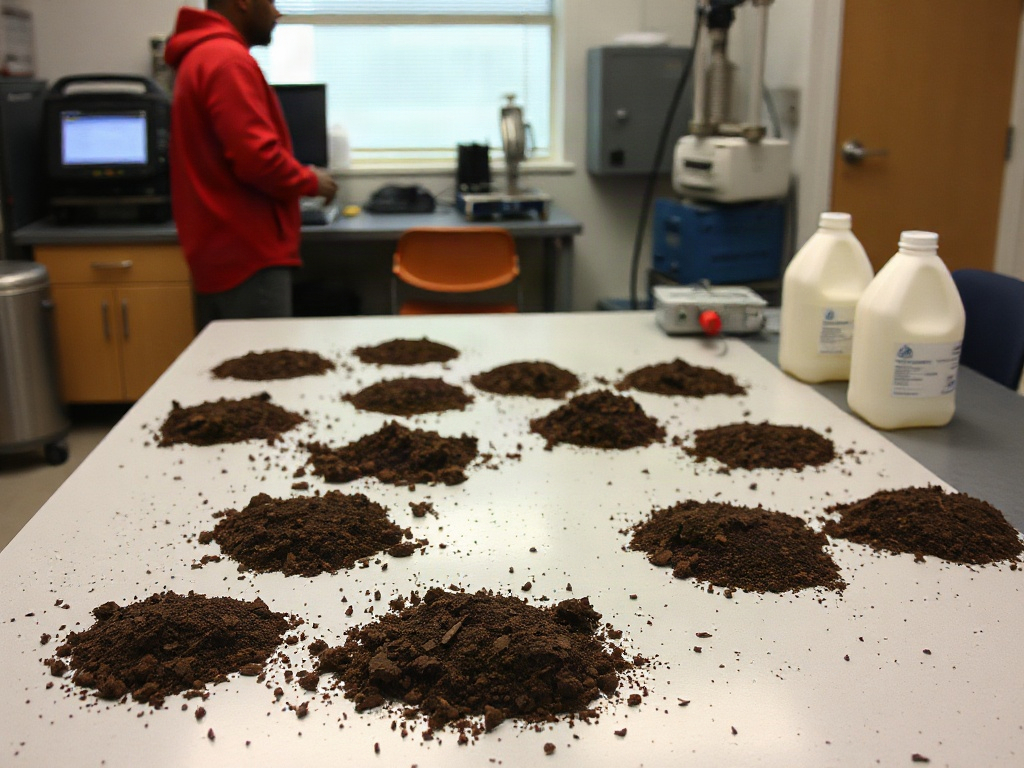

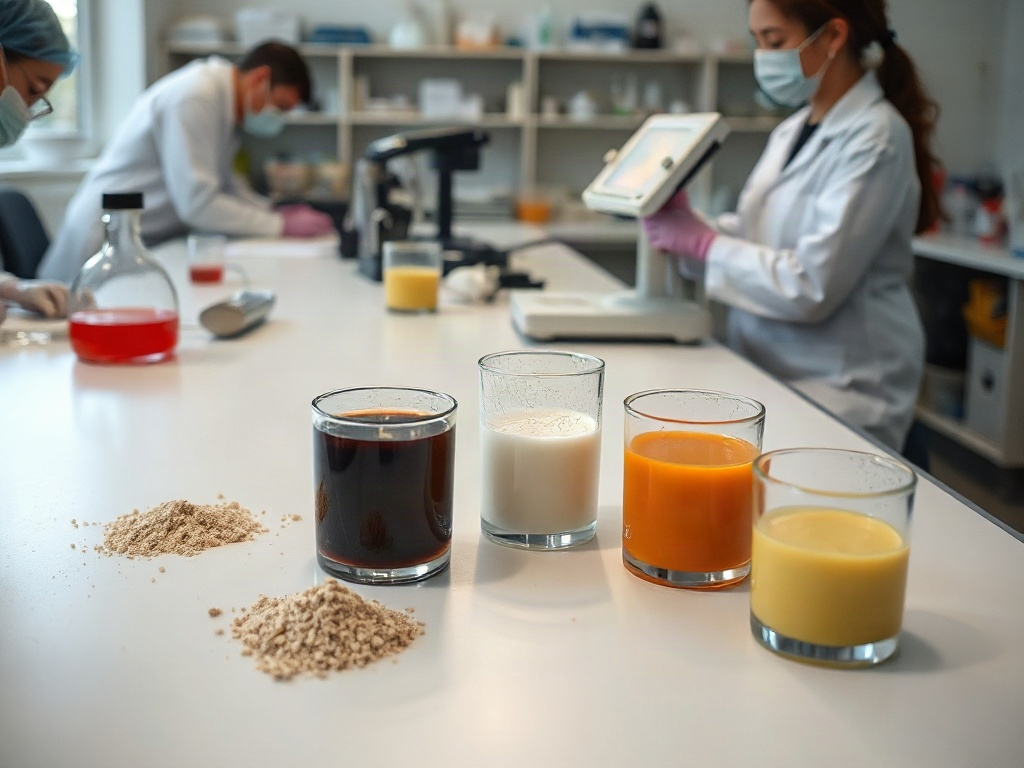
Raw Material Verification & Supplier Material Testing
Need to verify a raw material from your supplier?
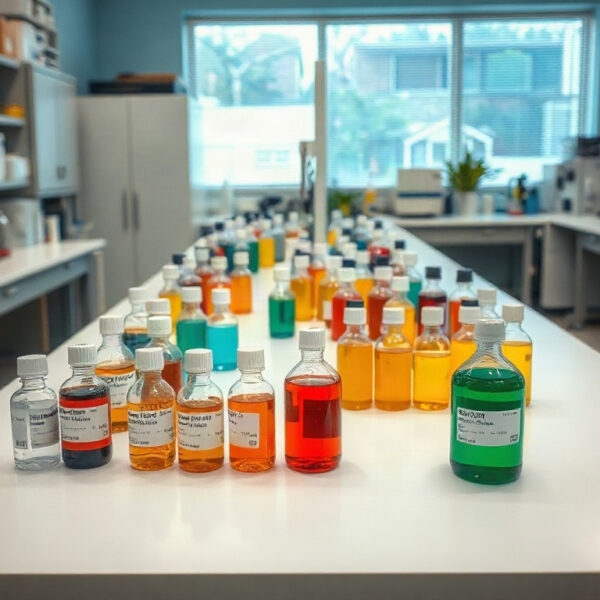
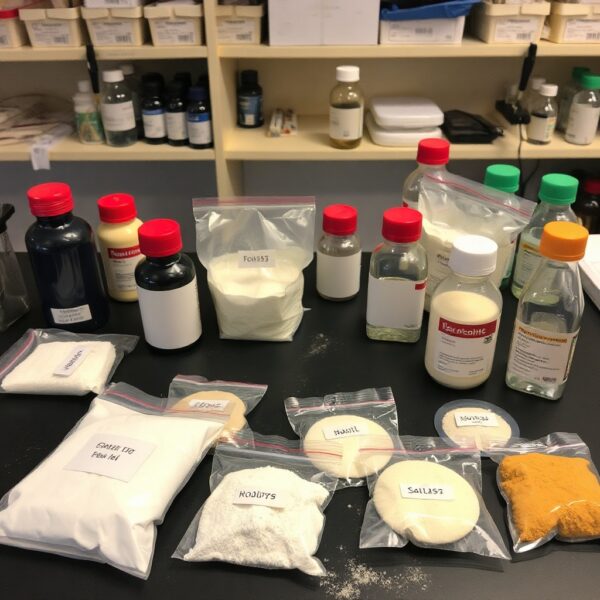
Our Raw Material Verification service helps assess and compare chemical raw materials, powders, liquids, resins, fillers, pigments and other manufacturing materials.
Tell us about your material and what you need to verify using the form above. We will review your requirements and recommend the most appropriate analytical testing.
Description
Verify Imported Chemical Raw Materials Before They Enter Your Production
Has your supplier told you that a material is a specific chemical or raw material — but you need independent verification?
Are different batches from the same supplier performing differently?
Do you need to check whether an imported powder, liquid, resin, filler or pigment is consistent with the material you previously received?
Labsure provides independent raw material verification and chemical characterisation services for Australian businesses.
We investigate the chemical, physical and elemental characteristics of raw materials using analytical techniques selected according to your sample and verification objective.
Depending on the material, our analytical approach may include FTIR, XRD, XRF, HPLC, GC-MS, ICP-OES, PSD and TGA.
From $495 AUD + GST
Typical turnaround: 15–25 business days
You don’t need to know which test you need.
Tell us what your supplier claims the material is, what you need to verify, and what problem you are experiencing. Labsure can recommend an appropriate analytical program.
Discuss Your Raw Material

What Can Raw Material Verification Help You Find Out?
A supplier specification, product name or Certificate of Analysis does not necessarily tell you everything about the material you have received.
Independent analytical testing can help Australian businesses investigate questions such as:
Is this actually the raw material my supplier claims it is?
Analytical techniques such as FTIR, XRD, XRF or chromatography may help determine whether a sample is chemically or materially consistent with the claimed raw material.
Are different batches consistent?
Comparative testing can be used to investigate whether samples from different production batches have similar or different analytical profiles.
Is an imported raw material different from our reference material?
If you have an approved or previously used sample, Labsure can compare the new material against the reference sample using appropriate analytical techniques.
Does the material contain unexpected components?
Depending on the sample, techniques such as GC-MS, HPLC, ICP-OES, XRF or TGA may help investigate organic components, elemental composition, inorganic materials or thermal characteristics.
Why is the raw material performing differently?
Analytical comparison may help identify differences that could contribute to changes in processing, stability, appearance or product performance.

Analytical Techniques for Raw Material Verification
The appropriate analytical method depends on the physical and chemical characteristics of the material.
01 — FTIR
Chemical identification and material fingerprinting
Fourier Transform Infrared Spectroscopy (FTIR) provides a characteristic infrared spectrum that can be used to screen and identify many organic and polymeric materials.
FTIR may be useful for investigating:
- Organic raw materials
- Polymers
- Resins
- Adhesive materials
- Coatings
- Solvents
- Surfactant-containing materials
- Other organic chemical materials
For a supplier verification project, FTIR can help determine whether a sample is consistent with an expected chemical or material type.
Why does it matter?
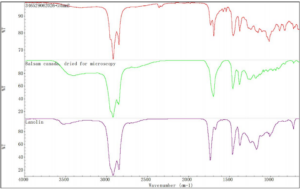
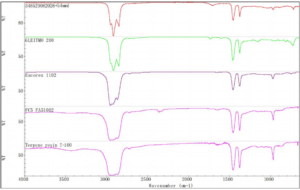
FTIR can provide an efficient first-level indication of the chemical nature of a material and help determine whether additional testing is required.
02 — XRD
Crystal structure and mineral identification
X-ray Diffraction (XRD) can be considered for crystalline powders, minerals, fillers, pigments and other solid raw materials.
It may help investigate:
- Mineral phases
- Crystalline compounds
- Inorganic fillers
- Pigments
- Powdered raw materials
- Differences between crystalline materials
XRD can be particularly useful when the question involves which crystalline phases are present, rather than simply determining the elemental composition.
Example
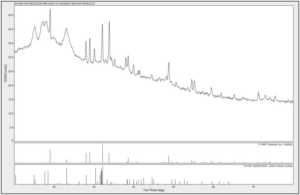
Two suppliers may provide powders with similar appearance and similar elemental composition, but their crystalline phases may differ.
XRD can help investigate these differences.
03 — XRF
Elemental composition of powders, minerals and inorganic raw materials
X-ray Fluorescence (XRF) can provide elemental composition information for suitable solid samples.
It may be considered for:
- Mineral raw materials
- Fillers
- Pigments
- Inorganic powders
- Ceramic-related materials
- Metal-containing materials
- Other elemental raw materials
Why is XRF useful for supplier verification?
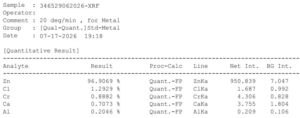
XRF can help determine whether the elemental profile of a supplied material is consistent with an expected material or reference sample.
For example, an imported mineral filler may be supplied under a particular specification. XRF can help investigate its elemental composition and identify significant differences between batches or suppliers.
04 — HPLC
Non-volatile organic raw materials and active components
High-Performance Liquid Chromatography (HPLC) can be considered for suitable organic raw materials and chemical components that are not well suited to GC-MS.
Depending on the sample, HPLC may help investigate:
- Organic raw materials
- Active components
- Specialty chemicals
- Organic additives
- Non-volatile compounds
- Formulation components
- Purity-related differences
HPLC can be particularly useful where the material contains an organic compound that requires chromatographic separation and measurement.
05 — GC-MS
Organic compounds and volatile components
Gas Chromatography–Mass Spectrometry (GC-MS) can be considered for suitable volatile and semi-volatile organic compounds.
It may help investigate:
- Organic solvents
- Volatile compounds
- Semi-volatile compounds
- Organic additives
- Chemical components
- Unexpected organic substances
- Differences between supplier samples
Example
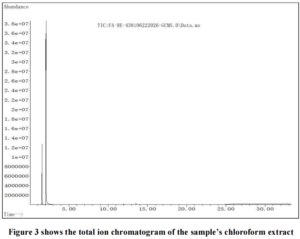
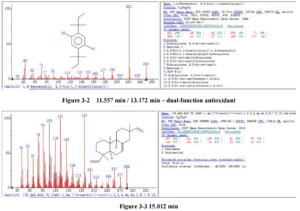
A supplier may identify a material using a general chemical or commercial name, while your production team needs to understand whether the material contains the expected organic components.
GC-MS may help investigate the organic chemical profile of suitable samples.
06 — ICP-OES
Elemental analysis of chemical raw materials
ICP-OES can provide elemental composition information for suitable samples.
Depending on the material and analytical objective, it may help investigate elements such as:
Na · K · Ca · Mg · Fe · Al · Cu · Zn
and other detectable elements.
ICP-OES can support:
- Raw material verification
- Supplier comparison
- Elemental characterisation
- Investigation of unexpected metals
- Contamination investigations
- Batch comparison
Example
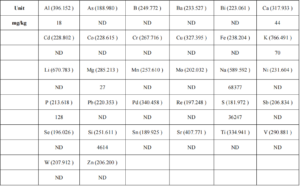
If two raw materials are supplied under the same specification but one produces unexpected results during manufacturing, elemental analysis may help determine whether there is a measurable difference in elemental composition.
07 — PSD
Particle size distribution of powders and particulate raw materials
For powdered raw materials, Particle Size Distribution (PSD) can be important because particle size can affect processing and final product performance.
PSD may help investigate:
- Powder consistency
- Supplier-to-supplier differences
- Batch-to-batch variation
- Fine and coarse particle fractions
- Processing-related differences
A raw material can have a similar chemical identity but a substantially different particle size distribution.
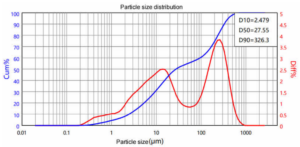
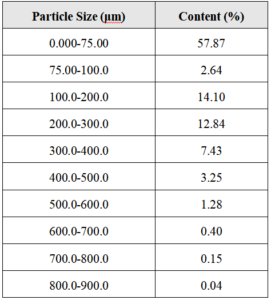
For applications where particle size is important, chemical identification alone may therefore not provide the complete picture.
08 — TGA
Thermal behaviour and compositional investigation
Thermogravimetric Analysis (TGA) measures changes in sample mass as temperature changes under controlled conditions.
It may help investigate:
- Thermal stability
- Moisture or volatile loss
- Decomposition behaviour
- Organic/inorganic content differences
- Batch-to-batch variation
- Thermal characteristics of polymers, fillers and other materials
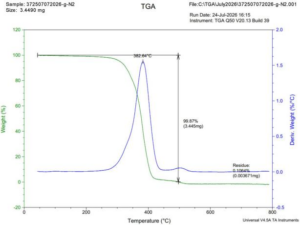
TGA can be useful as part of a broader analytical program when thermal behaviour or mass-loss characteristics are relevant to the verification objective.
Comparative Raw Material Analysis
Are two supplier materials actually the same?
One of the most useful applications of raw material verification is comparative analysis.
For example, you may have:
- A material from your existing supplier
- A new material from an alternative supplier
- An approved reference sample
- A previous production batch
- A material that is producing unexpected results
Labsure can investigate the samples using appropriate analytical techniques and compare their chemical, elemental, physical or thermal characteristics.
Comparative analysis may include:
- FTIR
- XRD
- XRF
- HPLC
- GC-MS
- ICP-OES
- PSD
- TGA
- Other appropriate analytical techniques
The exact analytical program depends on the material and the question you need answered.

Example: Imported Raw Material Verification
Situation
An Australian manufacturer imports a powdered raw material from overseas.
The supplier identifies the material as a particular mineral filler and provides a specification.
However, the latest batch behaves differently during production.
What can be investigated?
Depending on the material, Labsure may recommend a combination such as:
XRD + XRF + PSD
This can provide information about:
- Crystalline mineral phases
- Elemental composition
- Particle size distribution
The new batch can then be compared with a previously approved reference sample.
What does this achieve?
The objective is not simply to generate laboratory data.
The analytical results can help determine whether there are measurable differences between the supplier’s new batch and the reference material and provide technical information for further supplier or manufacturing investigation.
What Does the Final Report Include?
Depending on the analytical program, your report may include:
Sample Identification
Sample description, sample reference and analytical scope.
Analytical Results
Relevant analytical data such as:
- FTIR spectrum
- XRD results
- XRF elemental results
- HPLC chromatogram
- GC-MS chromatogram and identified compounds
- ICP-OES elemental results
- PSD results
- TGA data
Technical Interpretation
Where the analytical data supports an interpretation, Labsure can explain what the results indicate about the sample and how the findings relate to your verification objective.
The report is designed to help you understand the analytical findings rather than simply receiving raw instrument outputs.
One Raw Material Does Not Always Need Every Test
We do not automatically perform every analytical technique on every raw material.
The appropriate analytical program depends on:
- Material type
- Powder, liquid or solid form
- Supplier’s claimed identity
- Your verification objective
- Sample quantity
- Expected composition
- Available reference sample
- Whether chemical, elemental, physical or thermal characteristics need to be investigated
For example:
Organic chemical raw material
FTIR + HPLC or GC-MS
may be considered depending on the chemical characteristics.
Mineral or inorganic powder
XRD + XRF + PSD
may be appropriate for investigating phase, elemental and particle-size characteristics.
Polymer or resin
FTIR + TGA
may provide useful information, with additional techniques considered where required.
Complex imported raw material
A combination of FTIR, XRD, XRF, HPLC, GC-MS, ICP-OES, PSD or TGA may be considered depending on the analytical objective.
You don’t need to select the instruments yourself.
Tell us what your supplier claims the material is and what you need to verify. Labsure can help determine an appropriate analytical approach.
Who Is This Service For?
Our Raw Material Verification service is designed for Australian businesses working with:
- Chemical raw materials
- Imported powders
- Liquid chemicals
- Resins and polymers
- Mineral fillers
- Pigments
- Industrial additives
- Specialty chemicals
- Manufacturing materials
- Organic and inorganic raw materials
It can be particularly useful for Australian SMEs importing or purchasing materials from China, India, Southeast Asia and other international suppliers.
The service may help businesses with:
- Supplier verification
- Incoming raw material checks
- Alternative supplier qualification
- Batch comparison
- Material troubleshooting
- Imported material investigation
- Quality control investigations
- Supplier dispute investigation
- Product development and formulation work
Typical Questions We Help Answer
“My supplier says this is a particular raw material. Can you verify it?”
We can review the material and recommend an analytical approach based on the claimed identity and level of verification required.
“The new batch is behaving differently. Can you compare it with our old batch?”
Yes. Comparative testing can investigate measurable chemical, elemental, physical or thermal differences.
“I want to qualify a new overseas supplier. Can you test their material?”
Yes. Raw material verification can be used as part of an incoming material or alternative supplier assessment process.
“The supplier provided a COA. Do I still need independent testing?”
A supplier COA describes the supplier’s reported results. Independent analytical testing can provide additional information about the sample actually received.
“I don’t know which test I need.”
That’s fine.
Tell us:
- What the supplier says the material is
- Where the material is used
- What you are concerned about
- Whether you have an approved reference sample
We can then review the analytical objective and recommend suitable testing.
How Our Raw Material Verification Service Works
1. Tell us about your material
Provide the material name, supplier information, intended use and any available SDS, COA, technical specification or product information.
2. Explain what you need to verify
Tell us whether you are concerned about identity, purity, batch consistency, supplier differences, contamination or performance differences.
3. We recommend the analytical program
Our approach is based on the question you need answered, rather than automatically selecting a standard package.
4. Receive a quotation
We confirm the analytical scope, price and estimated turnaround before testing begins.
5. Send your sample
Once you approve the quotation, we provide sample submission instructions.
6. Analysis and technical report
The sample is analysed using the agreed analytical program, followed by technical review and reporting.
Why Choose Labsure?
Problem-Focused Analysis
We start with what you need to find out, not simply which instrument to use.
Multiple Analytical Techniques
Our analytical capability includes FTIR, NMR, HPLC, GC-MS, LC-MS/MS, XRD, XRF, SEM/EDS, PSD, TGA, IC and ICP-OES, allowing different techniques to be considered for different material types.
Suitable for Australian SMEs
You don’t need to maintain your own analytical laboratory or determine the analytical method yourself.
Fixed Quotation Before Testing
We review your requirements and confirm the analytical scope and price before proceeding.
Independent Raw Material Investigation
Useful for supplier verification, imported material assessment, batch comparison, quality investigations and formulation troubleshooting.
Pricing
Raw Material Verification — From $495 AUD + GST
Typical pricing:
$495–$995 AUD + GST
The final price depends on:
- Material type
- Analytical objective
- Number and complexity of analytical techniques
- Sample preparation requirements
- Required analytical sensitivity
- Whether comparison samples are required
Typical turnaround: 15–25 business days
Complex analytical investigations or projects requiring multiple techniques may require a longer turnaround.
Important: Analytical testing can provide evidence about the characteristics and composition of a sample, but the ability to conclusively verify a specific chemical identity, purity or specification depends on the material, reference information and analytical methods available. Results should be interpreted within the agreed analytical scope.