
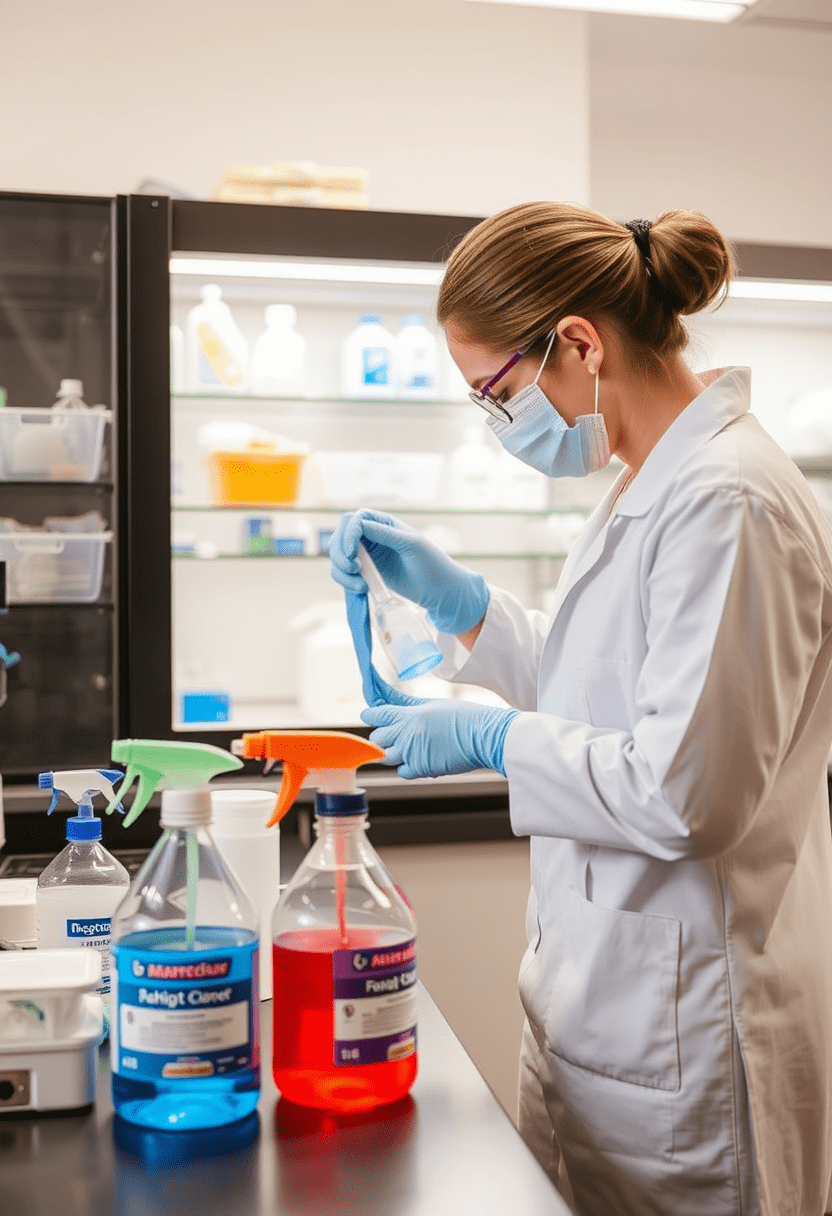
Commercial Glass Cleaner (Reverse Engineering Case Study)
A Brisbane-based commercial cleaning company was struggling with rising costs and inconsistent streak-free performance from their existing glass cleaner. Their goal was to match the performance of a leading market product while reducing cost per use and ensuring full compliance with Australian chemical regulations (AICIS).
Labsure applied chemical formulation reverse engineering to analyse a benchmark high-performance glass cleaner, identifying key solvent systems, surfactant balance, and anti-static performance drivers responsible for streak-free results and fast drying.
Based on this analysis, we developed an optimised, regulation-compliant formulation designed for Australian commercial use. The new formulation improved cleaning clarity, reduced residue and dust re-deposition through anti-static functionality, and used locally available, low-hazard raw materials to reduce supply chain and production costs.
The result was a scalable, cost-efficient glass cleaner that delivered consistent performance across multiple glass surfaces while significantly improving operational economics for the client.
Optimising a Streak-Free Glass Cleaner in Brisbane (Reverse Engineering Case Study)
Client:
A Brisbane-based commercial cleaning company providing services for offices and retail spaces across Queensland.
Challenge:
The client required a cost-effective, high-performance glass cleaner that could consistently deliver streak-free results across tinted and coated glass surfaces. Their existing formulation showed performance inconsistency and rising production costs, while still needing to comply with Australian chemical safety standards and AICIS requirements for commercial use.
Our Approach:
Labsure applied chemical formulation reverse engineering to analyse a benchmark high-performance glass cleaner widely used in the Australian market. Through detailed composition analysis, we identified key solvent systems, surfactant structures, and anti-static performance drivers responsible for fast drying, clarity, and dust resistance.
Based on these insights, we developed an optimised, regulation-compliant formulation tailored for Australian commercial cleaning applications. The formulation improved streak-free performance, enhanced drying speed, and reduced residue formation across multiple glass types. We also optimised raw material selection using locally available, low-hazard, low-VOC ingredients and improved production efficiency through process adjustments.
Results:
The reverse-engineered and optimised formulation delivered a high-performance, scalable glass cleaner with consistent streak-free results across all tested surfaces.
- 18% reduction in production cost per unit
- Reliable streak-free performance on tinted and coated glass
- Improved drying speed and reduced dust re-adhesion
- Full compliance with AICIS and Australian chemical safety standards
- Stronger operational efficiency and improved commercial competitiveness
Improve Your Cleaning Formulation
Tell us your product or challenge. We’ll analyse it and outline a clear reverse engineering and optimisation approach for the Australian market.