Description
Understand the Particle Size and Shape of Your Powder
What are the D10, D50 and D90 particle sizes of your powder?
Are the particles evenly distributed, or are they agglomerated?
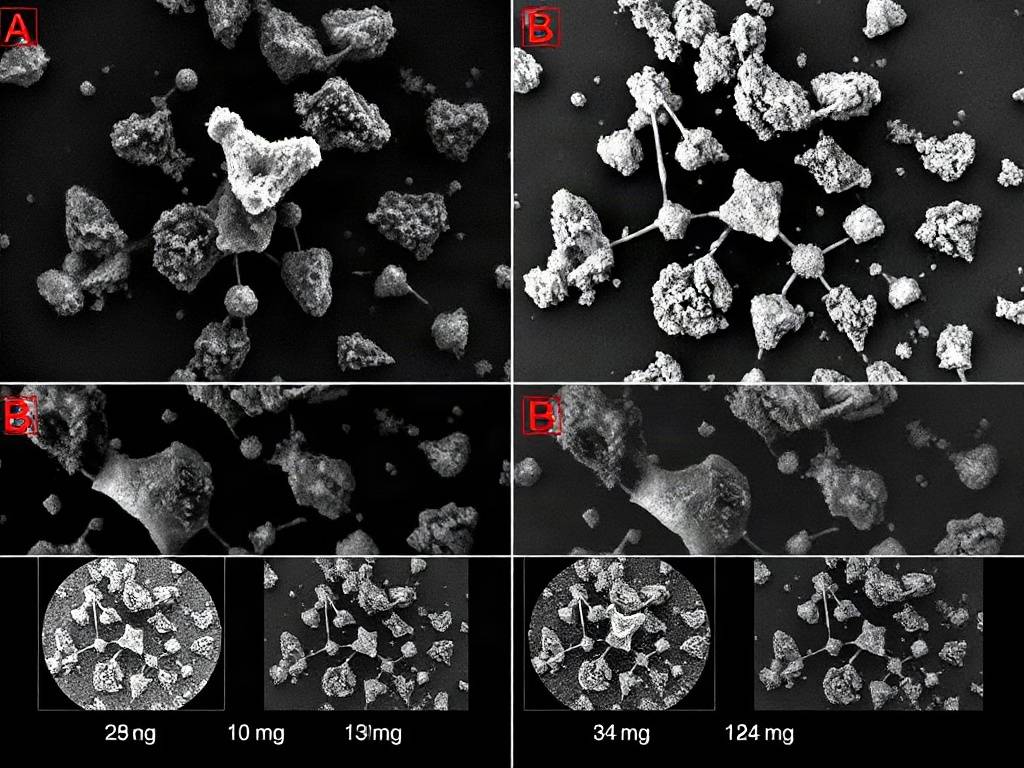
What do the particles actually look like under a microscope?
Could differences in particle size or morphology explain changes in processing or product performance?
Labsure provides particle size and morphology analysis for industrial powders and particulate materials.
Our analysis can investigate particle size distribution, particle morphology, agglomeration and, where required, elemental or mineral characteristics using analytical techniques selected according to your material and objectives.
Depending on the sample, our analytical approach may include:
PSD · SEM/EDS · XRD · XRF
From $595 AUD + GST
Typical turnaround: 15–25 business days
You don’t need to know which tests you need.
Tell us what material you have and what you need to understand. Labsure can recommend an appropriate analytical program.
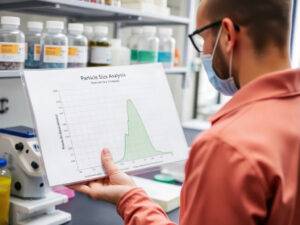
What Can Particle Size & Morphology Analysis Help You Find Out?
Particle characteristics can have a significant effect on how a powder behaves during manufacturing and how the final product performs.
Our analysis can help investigate questions such as:
What Are the D10, D50 and D90 Values?
Particle Size Distribution (PSD) can provide key particle size parameters including:
- D10 – 10% of particles are smaller than this size
- D50 – median particle size
- D90 – 90% of particles are smaller than this size
These values can help you understand the overall particle size distribution of a powder.
Are the Particles Agglomerated?
Some powders may contain individual particles as well as larger agglomerates.
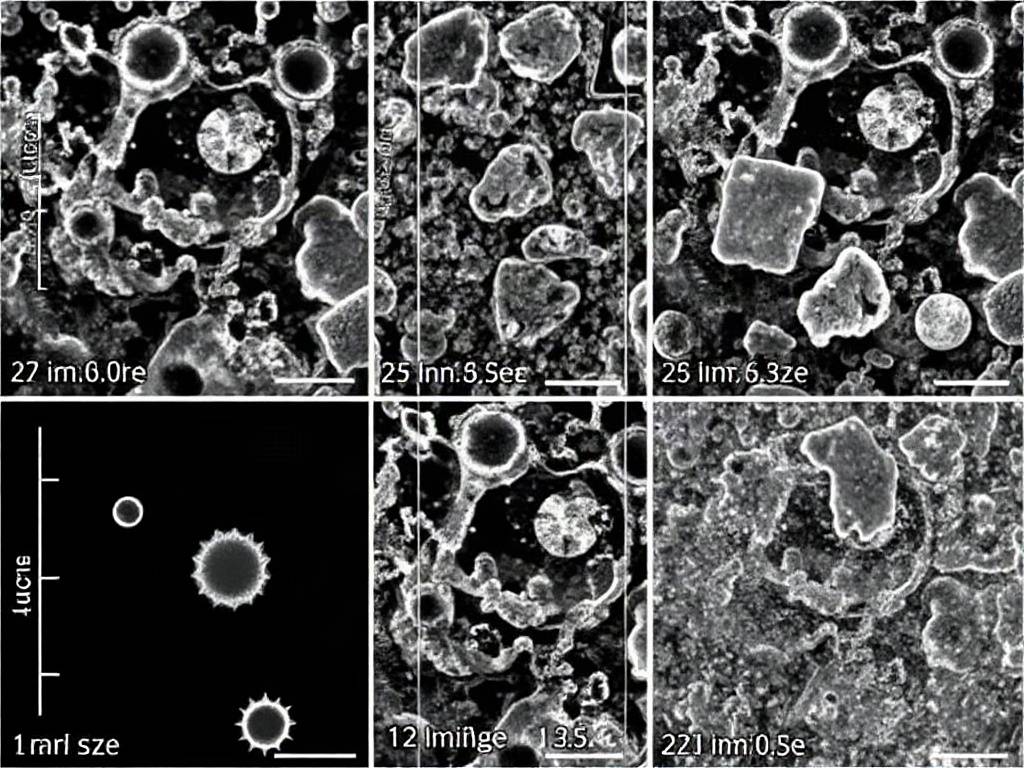
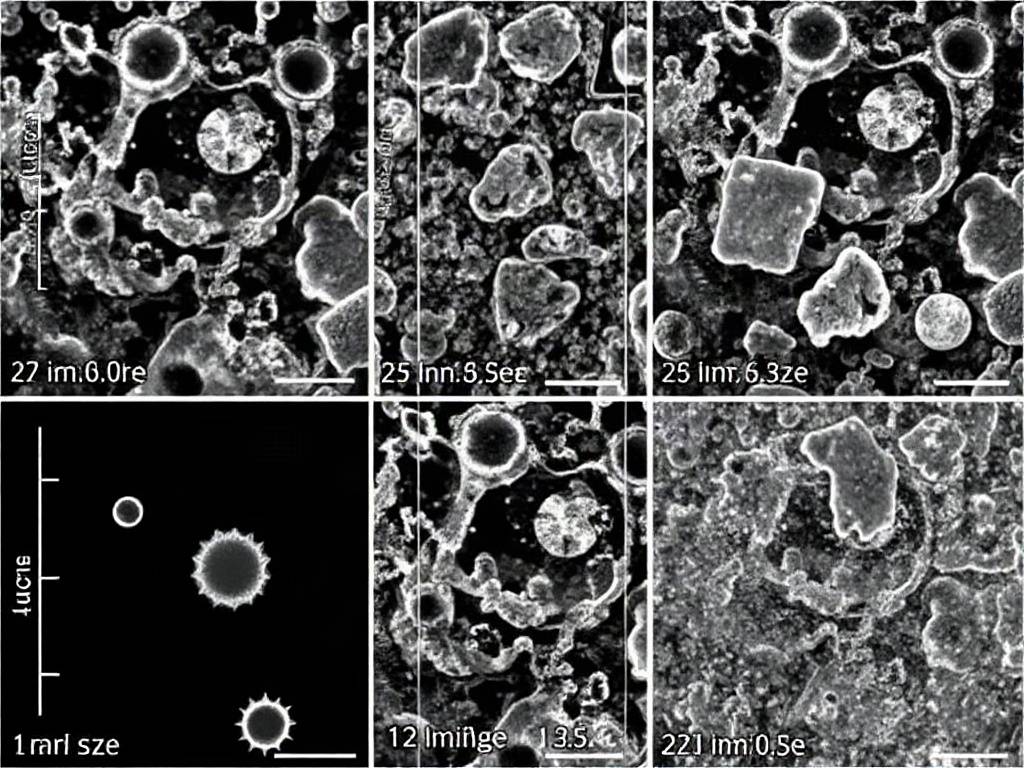
SEM imaging can help visually investigate:
- Particle aggregation
- Particle clusters
- Surface characteristics
- Individual particle appearance
- Differences in particle morphology
This can be particularly useful when a powder behaves differently during mixing, dispersion or processing.
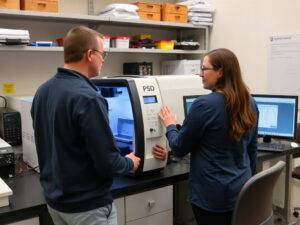
What Shape Are the Particles?
Particles can have very different morphologies even when their average particle size is similar.
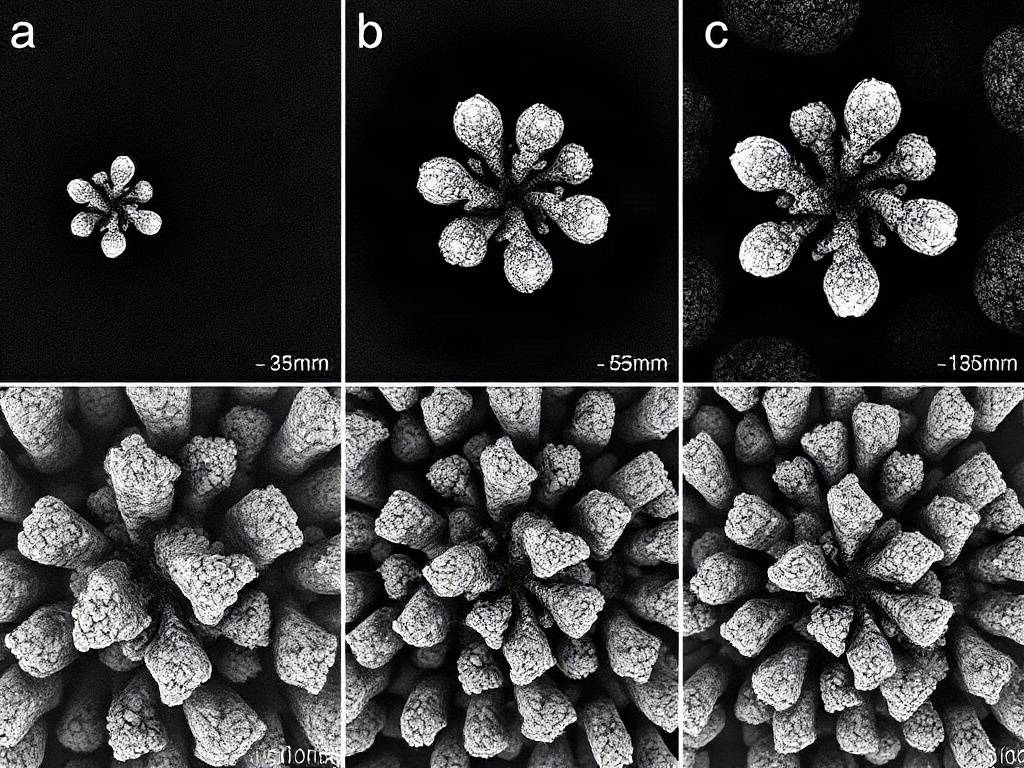
SEM may help investigate whether particles appear:
- Spherical
- Irregular
- Angular
- Plate-like
- Needle-like
- Fibrous
- Flake-like
- Agglomerated
Particle morphology can provide useful information when investigating differences between powders or suppliers.
Are Two Powders Different?
Comparative analysis can be used to compare:
- Different suppliers
- Different production batches
- New material vs reference material
- Before vs after processing
- Normal vs abnormal material
The comparison may include PSD + SEM/EDS, with XRD or XRF considered where mineral or elemental information is relevant.
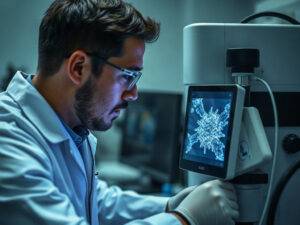
Analytical Techniques
01 — Particle Size Distribution (PSD)
Measure the Size Distribution of Your Powder
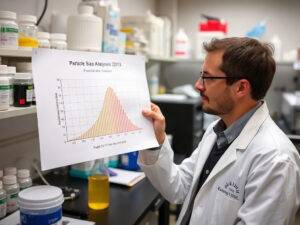
Particle Size Distribution (PSD) provides quantitative information about the distribution of particle sizes within a sample.
Depending on the analytical method and sample characteristics, results may include:
- D10
- D50
- D90
- Particle size distribution curve
- Size ranges or fractions
- Distribution characteristics
PSD can help investigate:
- Powder consistency
- Supplier differences
- Batch-to-batch variation
- Fine and coarse particle fractions
- Processing-related changes
- Particle size specifications
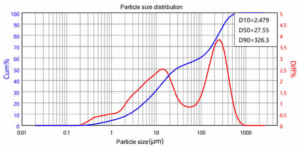
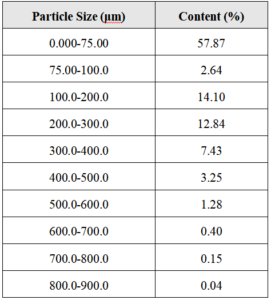
A material may have the same chemical identity but a significantly different particle size distribution.
02 — SEM/EDS
Particle Morphology and Elemental Information
Scanning Electron Microscopy (SEM) can provide high-magnification images of particle morphology and surface characteristics.
SEM may help investigate:
- Particle shape
- Surface texture
- Particle size appearance
- Agglomeration
- Particle clusters
- Irregular or angular structures
- Differences between samples
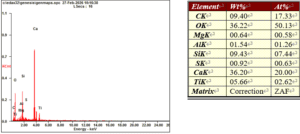
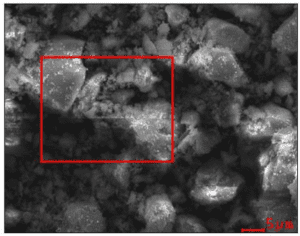
EDS (Energy Dispersive X-ray Spectroscopy) can provide elemental information associated with selected particles or areas.
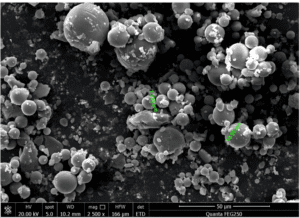
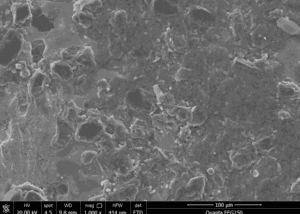
SEM/EDS can therefore provide both visual morphology information and supporting elemental information.
03 — XRD
Mineral and Crystalline Phase Identification
X-ray Diffraction (XRD) can be considered when the powder contains crystalline minerals or inorganic phases.
XRD may help investigate:
- Mineral phases
- Crystalline compounds
- Inorganic fillers
- Pigments
- Ceramic materials
- Differences between crystalline materials
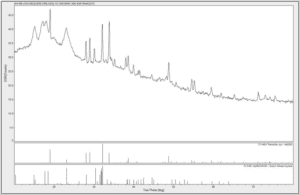
XRD can be particularly useful when particle size and morphology alone do not explain differences between samples.
04 — XRF
Elemental Composition
X-ray Fluorescence (XRF) can provide elemental composition information for suitable solid materials.
It may be considered for:
- Mineral powders
- Fillers
- Pigments
- Ceramic materials
- Inorganic raw materials
- Metal-containing materials
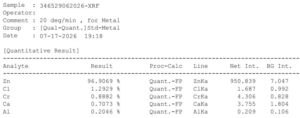
XRF can help determine whether two powders have similar or different elemental profiles.
Particle Size vs Particle Morphology
Why Do Both Matter?
Particle size and particle morphology are not the same thing.
Two powders may have similar D50 values but behave differently because their particle shapes and surface characteristics are different.
For example:
Powder A
- Similar D50
- More rounded particles
- Lower apparent agglomeration
Powder B
- Similar D50
- More irregular/angular particles
- More visible particle aggregation
Although the measured median particle size may be similar, the materials may behave differently during:
- Mixing
- Dispersion
- Flow
- Processing
- Application
- Surface formation
For this reason, PSD and SEM can complement each other when investigating industrial powders.
Comparative Particle Analysis
Compare Two Powders or Two Batches
If you have two samples, Labsure can perform comparative analysis to investigate measurable differences.
For example:
Supplier Comparison
Supplier A vs Supplier B
Investigate whether two suppliers provide powders with different particle size distributions or morphology.
Batch Comparison
Previous Batch vs New Batch
Investigate whether a new production batch has changed.
Reference Comparison
Approved Reference Sample vs New Material
Determine whether a newly received material has measurable differences from your approved sample.
Performance Investigation
Normal Material vs Problem Material
Investigate whether particle size, morphology or composition differences may be associated with a manufacturing or performance issue.
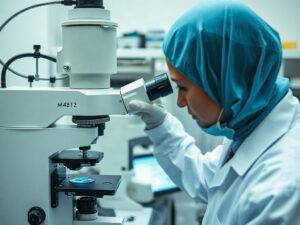
Example: Powder Performance Investigation
Situation
An Australian manufacturer uses a mineral powder in a coating or construction material.
The latest batch produces a different finish and does not disperse in the same way as the previous batch.
The supplier states that the material is the same specification.
What Can Be Investigated?
Labsure may recommend:
PSD + SEM/EDS
and, where appropriate:
XRD / XRF
This may provide information about:
- Particle size distribution
- D10 / D50 / D90
- Particle morphology
- Agglomeration
- Elemental composition
- Mineral phases
The new batch can then be compared with the previously approved material.
What Does This Achieve?
The analysis can help determine whether there are measurable differences in the particle characteristics or composition of the two samples.
This information can support further investigation with your supplier or manufacturing team.
Industries and Materials
Our Particle Size & Morphology Analysis service is suitable for a wide range of industrial powders and particulate materials, including:
Coatings
- Coating powders
- Mineral fillers
- Pigments
- Functional additives
Construction Materials
- Cementitious powders
- Microcement components
- Sand
- Mineral fillers
- Construction additives
Minerals
- Mineral powders
- Processed minerals
- Industrial minerals
- Inorganic materials
Ceramics
- Ceramic powders
- Mineral components
- Inorganic fillers
Plastics
- Polymer powders
- Plastic fillers
- Mineral additives
- Functional powders
Chemical Manufacturing
- Industrial powders
- Chemical raw materials
- Fillers
- Pigments
- Specialty particulate materials
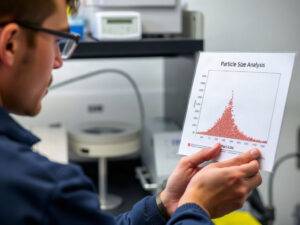
What Does the Final Report Include?
Depending on the analytical program, your report may include:
Particle Size Results
- D10
- D50
- D90
- Particle size distribution
- Distribution data and graphs
SEM Results
- SEM images
- Particle morphology observations
- Agglomeration observations
- Surface characteristics
EDS Results
- Elemental information
- Selected particle or area analysis
XRD Results
- Identified crystalline phases, where applicable
XRF Results
- Elemental composition, where applicable
Technical Interpretation
Where supported by the analytical data, Labsure can explain the key differences observed between samples and how they may relate to your analytical objective.
One Sample Does Not Always Need Every Test
We do not automatically perform every analytical technique on every powder.
The appropriate analytical program depends on:
- Material type
- Particle characteristics
- Sample quantity
- Your analytical objective
- Whether comparison samples are available
- Whether morphology needs to be investigated
- Whether elemental or mineral composition needs to be investigated
For example:
Basic Particle Size Investigation
PSD
may be sufficient when the primary question is particle size distribution.
Particle Size + Morphology
PSD + SEM/EDS
may be appropriate when you need to understand both particle size and particle shape or agglomeration.
Mineral Powder Investigation
PSD + SEM/EDS + XRD/XRF
may be considered when particle characteristics and mineral or elemental composition all need to be investigated.
You don’t need to select the instruments yourself.
Tell us what material you have and what you need to find out. Labsure can recommend an appropriate analytical approach.
Who Is This Service For?
Our Particle Size & Morphology Analysis service is designed for Australian businesses working with:
- Industrial powders
- Sand
- Pigments
- Fillers
- Mineral materials
- Ceramic powders
- Plastic additives
- Chemical raw materials
- Construction materials
- Coating materials
- Other particulate manufacturing materials
It can be particularly useful for businesses investigating:
- Supplier differences
- Batch variation
- Powder consistency
- Processing problems
- Dispersion issues
- Material performance differences
- Quality control problems
- Incoming material verification
- Product development
How Our Particle Size & Morphology Analysis Works
1. Tell Us About Your Material
Provide the material name, supplier information, intended use and any available SDS, COA, technical specification or product information.
2. Explain What You Need to Understand
Tell us whether you are primarily concerned about particle size, morphology, agglomeration, supplier differences, batch variation or material performance.
3. We Recommend the Analytical Program
We select appropriate techniques based on the material and your analytical objective.
4. Receive a Quotation
We confirm the analytical scope, price and estimated turnaround before testing begins.
5. Send Your Sample
Once you approve the quotation, we provide sample submission instructions.
6. Analysis and Technical Report
The sample is analysed using the agreed analytical program, followed by technical review and reporting.

Why Choose Labsure?
Problem-Focused Analysis
We start with what you need to find out, rather than simply selecting a standard testing package.
Particle Size and Morphology
Our analytical approach can combine quantitative PSD data with SEM imaging to provide a more complete understanding of industrial powders.
Additional Material Characterisation
Where required, XRD and XRF can be considered to investigate mineral phases and elemental composition.
Suitable for Australian SMEs
You don’t need to maintain your own analytical laboratory or determine the analytical method yourself.
Fixed Quotation Before Testing
We review your requirements and confirm the analytical scope and price before proceeding.
Pricing
Particle Size & Morphology Analysis — From $595 AUD + GST
Typical Pricing: $595–$1,295 AUD + GST
The final price depends on:
- Material type
- Number of samples
- Analytical techniques required
- Sample preparation requirements
- Whether SEM/EDS is required
- Whether XRD/XRF is required
- Whether comparative analysis is required
Typical Turnaround: 15–25 Business Days
Projects requiring multiple analytical techniques or comparative analysis may require a longer turnaround.
Important Information
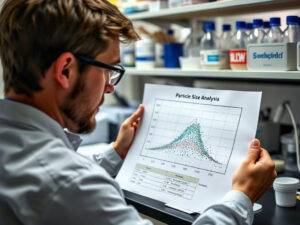
Particle size and morphology analysis provides analytical information about the physical characteristics of a sample.
PSD results describe the measured particle size distribution under the agreed analytical method and conditions. SEM provides representative images of the particles examined and should not necessarily be interpreted as a complete representation of every particle in the sample.
The analytical results should therefore be interpreted within the agreed analytical scope and sample preparation conditions.
Need to Understand Your Powder?
Tell us what material you have and what you need to find out.
You don’t need to choose the analytical techniques yourself.
Labsure can review your requirements and recommend an appropriate analytical program.
From $595 AUD + GST
Typical Turnaround: 15–25 Business Days