From a proven market product to a production-ready automotive detailing formula — without starting R&D from zero
For many Australian automotive detailing businesses, the idea of launching their own branded products is attractive.
They already have customers.
They already understand what detailers want.
They may already sell car shampoos, wheel cleaners, tyre dressings, spray waxes or ceramic products through their workshop, retail store or online shop.
The problem is usually not finding a product opportunity.
The problem is formulation development.
A business may know that a particular spray wax performs extremely well. Customers like the gloss. Detailers like how easily it wipes off. The product leaves a noticeable hydrophobic effect and does not create excessive streaking or residue.
But there is one major problem:
They do not know how to manufacture it.
They do not have the formulation.
They may not have an in-house chemist.
And starting from a blank page can mean months of trial and error, multiple raw material purchases, failed batches and significant development costs before they even know whether the final product will work.
This was the situation faced by an Australian automotive products business based in Victoria.
The company already understood its market and had experience selling automotive detailing products. It had identified a commercially successful spray wax that performed particularly well with its customers.
Rather than simply continue selling someone else’s product, the business wanted to develop its own branded alternative.
The objective was not to invent an entirely new chemistry.
The objective was much more practical:
Take a proven product, understand how it works, reconstruct the formulation, improve it where necessary, and create a version that could be manufactured under the client’s own brand.
This is where reverse engineering can dramatically shorten the path from product idea to commercial production.
The Business Problem: “We Know What We Want, But We Don’t Have the Formula”
The client was not starting with a laboratory concept.
They were starting with something much more valuable:
market knowledge.
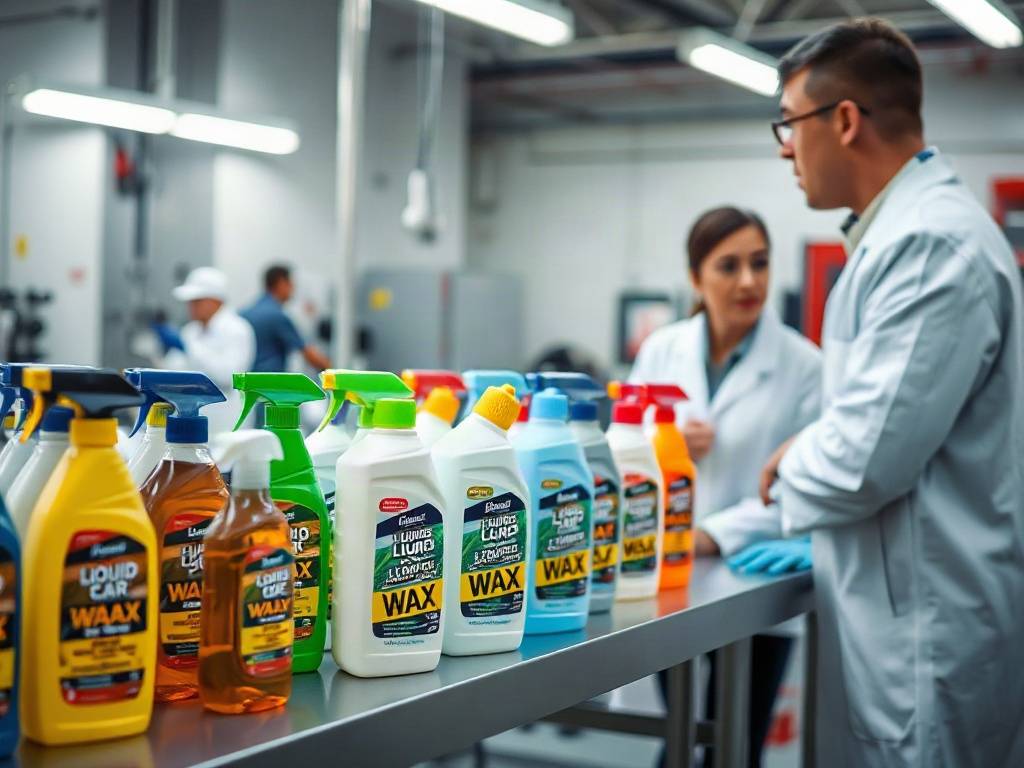
They knew which type of spray wax customers liked.
They knew how the product behaved during application.
They knew what finish customers expected.
They also knew what they wanted to improve.
The benchmark product provided a real-world reference for the development team.
Instead of asking:
“What type of spray wax should we develop?”
the project started with a much more useful question:
“What makes this particular spray wax perform so well, and how can we reproduce the important performance characteristics in a formulation suitable for our own brand?”
This distinction is important.
Traditional formulation development often starts with raw materials and theoretical chemistry.
Reverse engineering starts with a finished product that has already demonstrated market acceptance.
For a small or medium-sized Australian business, this can substantially reduce development uncertainty.
What the Client Wanted to Achieve
The client’s objective was to develop a private-label spray wax that could provide a similar overall user experience to the benchmark product while allowing the formulation to be adapted for its own commercial requirements.
The target development criteria included:
1. High gloss
The finished product needed to produce a visible improvement in paint gloss after application.
The gloss effect was important because the product would be positioned as an appearance-enhancement product rather than simply a cleaning spray.
2. Strong water behaviour
The client wanted noticeable hydrophobic behaviour after application.
Water beading and water runoff were important visual indicators for customers and detailers.
3. Easy application
The spray wax needed to spread easily across automotive paint without requiring excessive product.
The user experience needed to remain suitable for both professional detailers and consumers.
4. Easy wipe-off
One of the most important practical requirements was wipe-off behaviour.
A product can have excellent theoretical protection characteristics but still fail commercially if it becomes difficult to buff.
The target was therefore a formulation that could be sprayed, spread and removed efficiently with a microfibre towel.
5. Low streaking and residue
The client wanted to minimise visible streaks, haze and oily residue, particularly on dark automotive paint.
This is a common challenge with products containing film-forming polymers, silicones or wax systems.
6. Stable appearance
The product needed to remain physically stable during storage and transportation.
This included consideration of:
- separation
- settling
- viscosity changes
- colour changes
- phase instability
- temperature exposure
7. Commercially realistic raw materials
The formula also needed to make sense economically.
A technically excellent formulation is not necessarily a commercially viable formulation.
The client therefore wanted raw materials that could be sourced reliably and incorporated into a scalable manufacturing process.
Why Reverse Engineering Was the Starting Point
The most important decision in the project was not to start formulation development from zero.
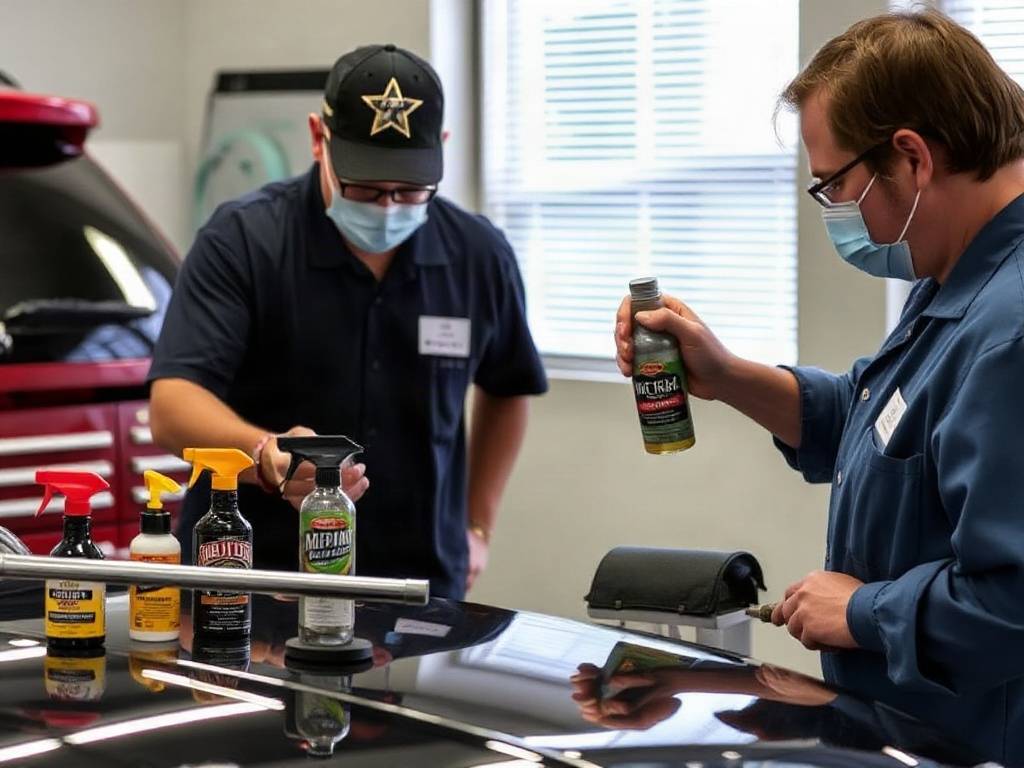
The client supplied a reference sample of the benchmark spray wax.
Labsure’s role was to investigate the chemical architecture behind the product.
A modern spray wax is not simply “wax in water”.
Depending on the product design, the formulation may contain combinations of:
- silicone emulsions
- synthetic waxes
- film-forming polymers
- hydrophobic polymers
- surfactants
- wetting agents
- solvents or co-solvents
- emulsifiers
- dispersing agents
- preservatives
- pH modifiers
- rheology modifiers
- fragrance
- water
The performance of the final product depends not only on which ingredients are present, but also on their relative proportions and interactions.
For example, increasing a film-forming component may improve water behaviour but can negatively affect wipe-off.
Increasing a silicone system may enhance slickness and gloss but can influence stability or surface appearance.
Changing the emulsifier system may affect both physical stability and application behaviour.
This is why simply identifying an ingredient is not enough.
The real objective of formulation reverse engineering is to understand the functional structure of the formulation.
Labsure’s broader formulation analysis service combines analytical techniques such as GC-MS, HPLC and FTIR with formulation interpretation to identify key components and understand their roles within a complex chemical product.
Step 1 – Benchmark Product Analysis
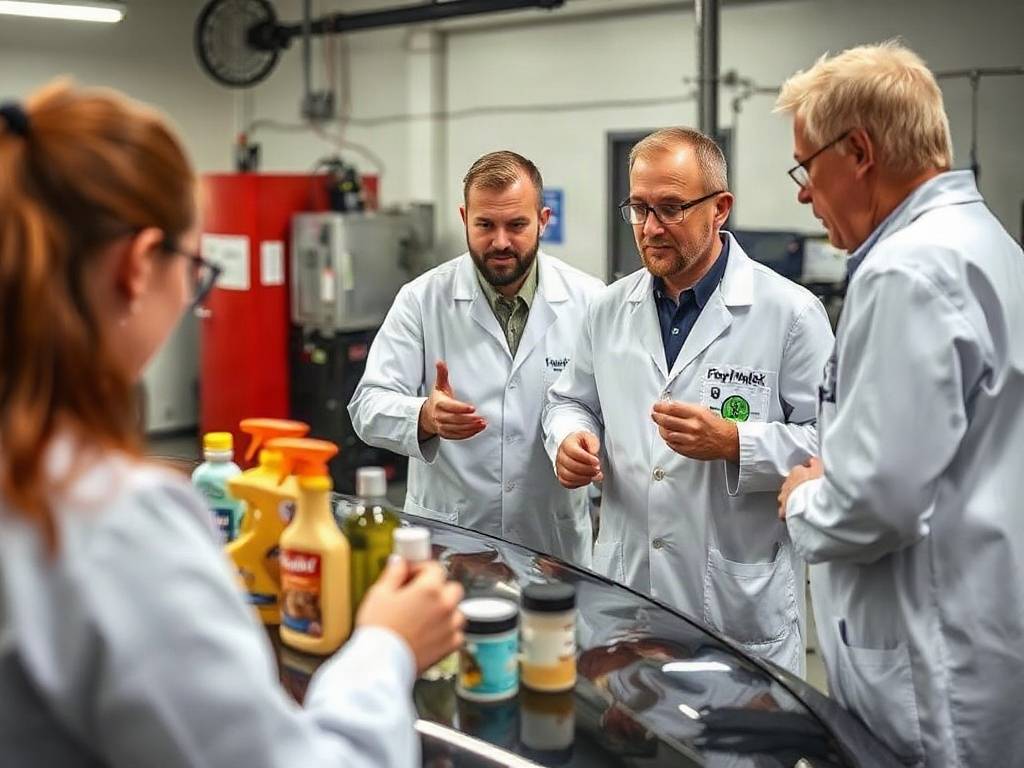
The first stage was to establish what was actually inside the reference product.
Rather than immediately attempting multiple laboratory batches, the formulation was analysed systematically.
The analytical strategy was selected according to the expected chemistry of the product.
The investigation focused on areas such as:
Organic components
Chromatographic and spectroscopic techniques can help identify organic ingredients, solvents, silicone-related components, additives and other formulation constituents.
Polymer and film-forming systems
Particular attention was given to components likely to contribute to:
- gloss
- slickness
- hydrophobicity
- film formation
- durability
Wax and silicone systems
The presence and functional contribution of wax-like and silicone-based materials were investigated because these can have a major influence on spray wax performance.
Physical formulation structure
The analysis also considered the product’s physical characteristics, including its appearance, viscosity and dispersion/emulsion behaviour.
The goal was not simply to produce a long list of chemical names.
The useful output was a formulation map.
That map allowed the development team to understand which ingredients were likely to be critical, which were supporting ingredients, and which components could potentially be substituted or optimised.
Step 2 – Reconstructing the Formulation
Once the formulation architecture had been established, the next challenge was turning analytical information into a workable formula.
This is where reverse engineering becomes different from ordinary chemical testing.
A laboratory report might tell you:
“Component X is present.”
But a manufacturer needs to know:
“How much should we use, what should it be combined with, and how do we manufacture the finished product consistently?”
The reconstruction stage therefore considered:
- approximate concentration ranges
- functional roles
- compatibility between ingredients
- emulsification requirements
- mixing sequence
- pH
- viscosity
- stability
- raw material availability
- manufacturing practicality
The objective was to develop a functionally equivalent formulation, rather than simply reproduce a laboratory analysis report.
This is an important distinction for businesses considering reverse engineering.
The analytical result is not the finished product.
It is the technical foundation for developing the finished product.
Step 3 – The Formula Was Not Simply Copied
One of the most commercially important parts of the project was optimisation.
The client did not necessarily need the exact same formula.
In fact, reproducing every ingredient exactly can sometimes create unnecessary cost, supply-chain problems or technical limitations.
Instead, the question became:
Which parts of the benchmark formulation are responsible for the performance, and which parts can be changed?
This allowed the formulation to be redesigned around the client’s own commercial objectives.
For example, the development process could consider:
Performance optimisation
Could the formulation maintain strong gloss and water behaviour while improving wipe-off?
Cost optimisation
Could an expensive specialty raw material be replaced with a more commercially suitable alternative?
Supply optimisation
Could materials be selected from suppliers that provide more reliable Australian availability?
Stability optimisation
Could the formulation be adjusted to improve stability during Australian storage and transportation?
Application optimisation
Could the spray pattern, spreading behaviour and microfibre wipe-off be improved?
This is the real commercial advantage of reverse engineering.
You are not locked into the benchmark formula.
You use the benchmark as a technical starting point.
From “Similar Product” to “Our Product”
This was ultimately the most important objective for the client.
The company did not want to remain dependent on another brand.
It wanted to own the product concept, packaging, positioning and customer relationship.
That changes the commercial equation.
Instead of:
Supplier → Imported Product → Australian Distributor → Customer
the business can move toward:
Own Brand → Own Specification → Australian Manufacturing → Customer
This creates considerably more control over the product.
The business can decide:
- what performance characteristics matter
- what fragrance to use
- what packaging to select
- what price position to target
- what claims to make
- what raw materials to use
- what product variants to develop
- what production quantity makes sense
For a growing automotive detailing business, this can be much more valuable than simply finding another supplier.
Why This Approach Can Be Faster Than Traditional R&D
Imagine a business trying to develop a spray wax entirely from scratch.
The development team may need to investigate dozens of possible:
- silicone systems
- wax systems
- polymers
- emulsifiers
- surfactants
- solvents
- preservatives
- rheology modifiers
Every change creates another variable.
A product may look excellent in one batch and then become unstable after several weeks.
Another formula may have excellent water beading but poor wipe-off.
Another may have good gloss but leave visible residue on black paint.
The process can quickly become an expensive cycle of:
formulate → test → fail → modify → retest → reformulate
Reverse engineering does not eliminate testing.
But it can reduce the number of unknowns.
Instead of exploring the entire formulation universe, the development team begins with a product that has already demonstrated commercial performance.
That provides a much stronger starting point.
Testing the Reconstructed Spray Wax
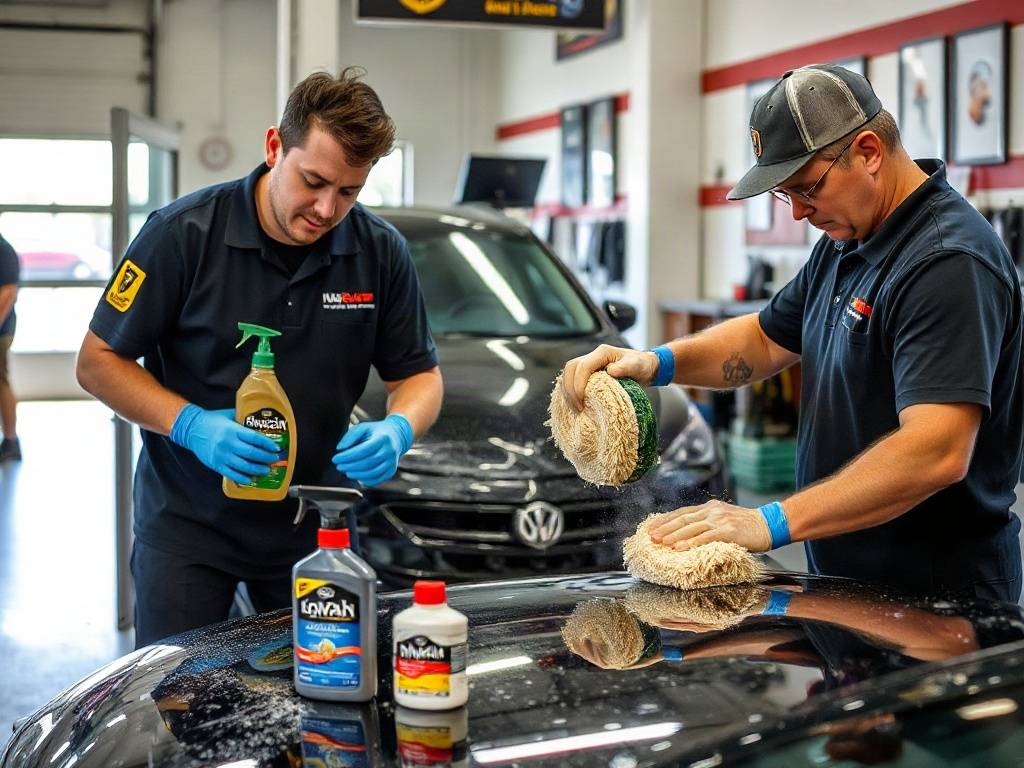
Once the reconstructed formulation was prepared, the development process moved from analytical chemistry into practical product evaluation.
For an automotive spray wax, laboratory composition data alone is not enough.
The product must work on the surface.
The development criteria therefore included practical evaluation of characteristics such as:
- sprayability
- spreading
- wipe-off
- gloss
- slickness
- visible residue
- streaking
- water behaviour
- appearance on dark paint
- short-term stability
- storage stability
The benchmark product was useful as a reference throughout this stage.
The objective was not to ask:
“Does the laboratory formula look correct?”
The more important question was:
“Does the reconstructed product behave correctly in the real application?”
This is the point where analytical reverse engineering and formulation development need to work together.
Australian Conditions Matter
A formulation that performs well in one market does not automatically mean it is optimised for Australia.
Australian businesses need to consider the conditions in which products will actually be stored, transported and used.
Automotive detailing products may experience:
- high summer temperatures
- prolonged warehouse storage
- transport exposure
- direct sunlight
- variable humidity
- repeated opening and closing
- different water qualities
- professional and consumer application conditions
For this reason, formulation optimisation may include stability considerations relevant to Australian storage and distribution.
A product that performs perfectly when freshly manufactured but separates or changes viscosity after extended storage is not commercially ready.
The target is not merely a successful laboratory sample.
The target is a repeatable product that can be manufactured, stored, transported and sold.
From Formula to Raw Material Procurement
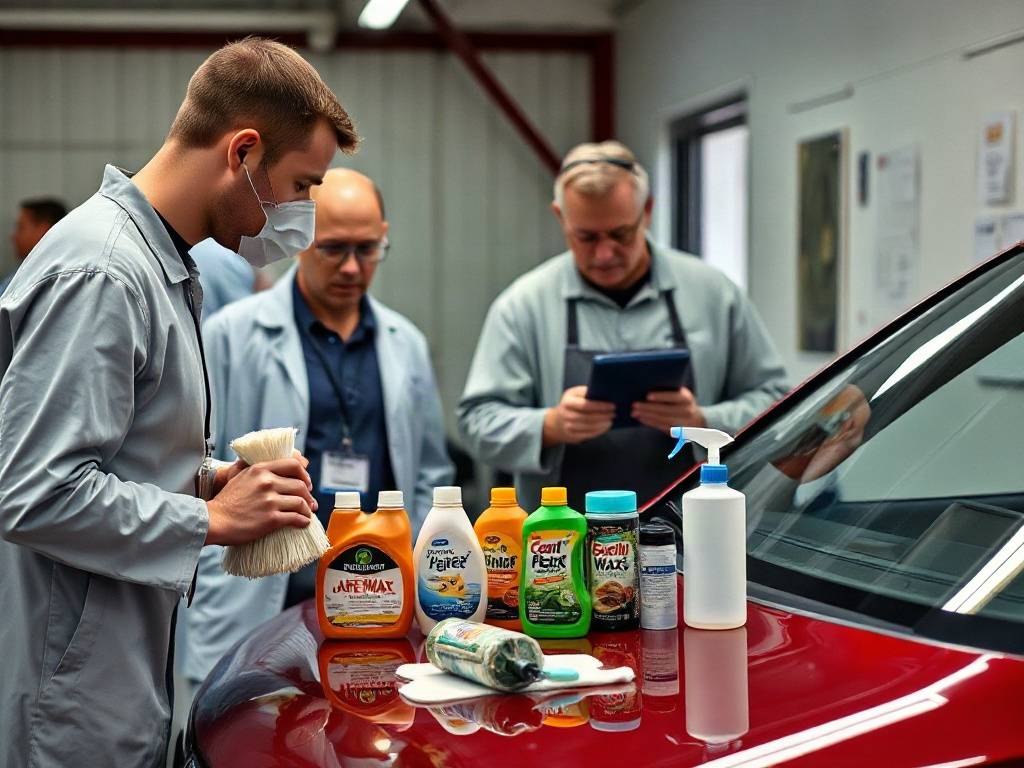
Another important advantage of this approach is that the project does not have to stop at formulation development.
Once the formulation is established, the next challenge is often sourcing.
A formulation may specify a particular silicone, polymer, emulsifier or preservative, but that does not necessarily mean the original supplier is the best option for the client’s business.
Labsure can help identify suitable raw material options based on:
- technical requirements
- functional equivalence
- availability
- pricing
- minimum order quantities
- supplier reliability
- Australian sourcing considerations
This can be particularly important for smaller Australian brands.
A product that depends on one difficult-to-source imported raw material may create supply-chain risk.
A commercially practical formulation should consider the supply chain from the beginning.
Production Guidance: The Formula Must Work Outside the Laboratory
A common mistake in product development is assuming that a formula that works at 500 mL will automatically work at 500 litres.
It may not.
Scale-up can introduce problems involving:
- mixing energy
- addition sequence
- shear
- dispersion
- temperature
- batch time
- raw material pre-dilution
- viscosity development
- emulsification
- filling behaviour
Therefore, production guidance is an important final step.
The objective is to establish a manufacturing process that can be repeated consistently.
For businesses that do not have their own manufacturing facility, the next step can be contract manufacturing.
Labsure’s automotive contract manufacturing model is designed around two common situations: businesses that already have a formulation and businesses that need a market-proven product reverse engineered and optimised before production.
This creates a complete pathway:
Benchmark Product
↓
Reverse Engineering
↓
Formulation Reconstruction
↓
Performance Optimisation
↓
Raw Material Selection
↓
Pilot Batch
↓
Production Guidance
↓
Contract Manufacturing
↓
Own Automotive Detailing Brand
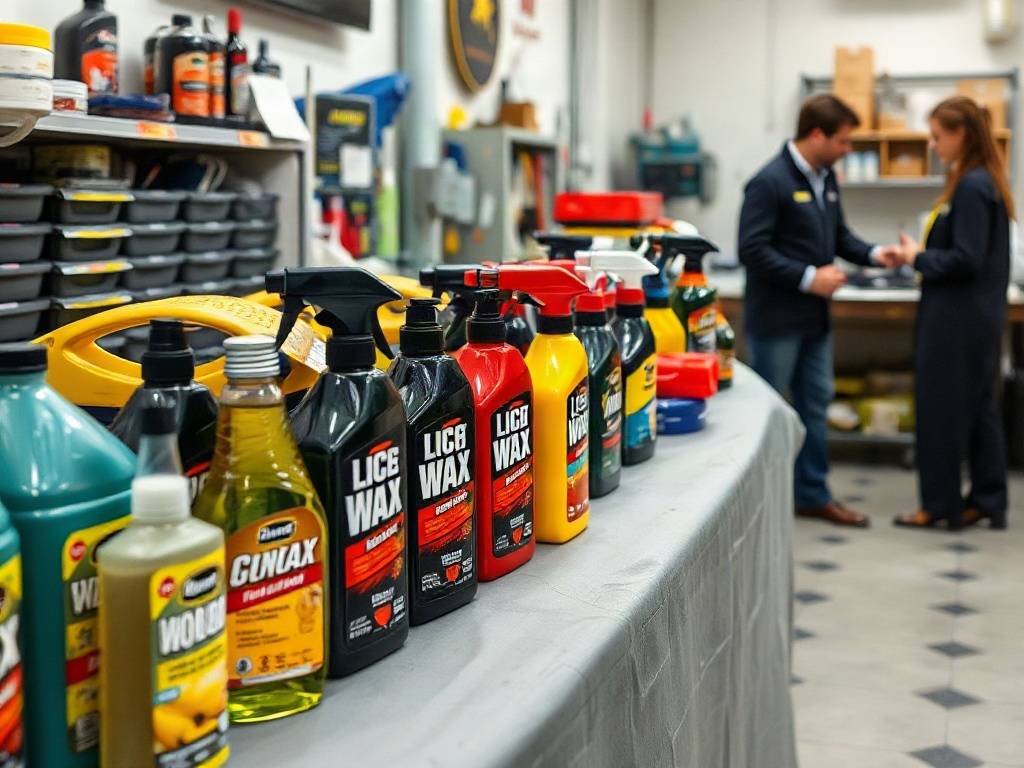
What the Client Really Bought Was Not a Formula
At first glance, the project may appear to be about obtaining a spray wax formula.
But the real commercial outcome is much broader.
The client gained a pathway to move from reselling a product to owning a product.
That means greater control over:
Product
The company can define its own performance specification.
Brand
The product can be sold under its own brand rather than another manufacturer’s name.
Pricing
The business can build its own margin structure instead of accepting distributor pricing.
Supply
The company can reduce dependence on a single finished-product supplier.
Product Development
The same development methodology can later be applied to other products.
Once a business understands how reverse engineering works, the approach can be extended to an entire automotive range.
For example:
- Car Shampoo
- Snow Foam
- Wheel Cleaner
- Iron Remover
- APC
- Interior Cleaner
- Tyre Dressing
- Trim Restorer
- Quick Detailer
- Spray Wax
- Ceramic Spray
- Paint Sealant
- Glass Cleaner
Labsure already provides formulation analysis across a broad range of automotive detailing products, including car shampoos, wheel cleaners, tyre shine, interior care and surface-protection products.
Why This Model Makes Sense for Australian SMEs
Large chemical companies can afford dedicated formulation chemists, analytical laboratories and extensive product-development programmes.
Many Australian SMEs cannot.
But they often have something large companies do not:
direct knowledge of the customer.
A detailing shop knows what professional detailers complain about.
A distributor knows which products sell.
An e-commerce business knows which products generate repeat purchases.
A workshop knows which chemicals technicians actually want to use.
That market knowledge is extremely valuable.
The missing piece is often the chemistry.
Reverse engineering can connect the two.
Instead of asking a small business owner to become a chemist, the process allows them to start with what they already know:
“This product sells. My customers like it. I want my own version.”
Labsure can then help turn that commercial knowledge into technical information.
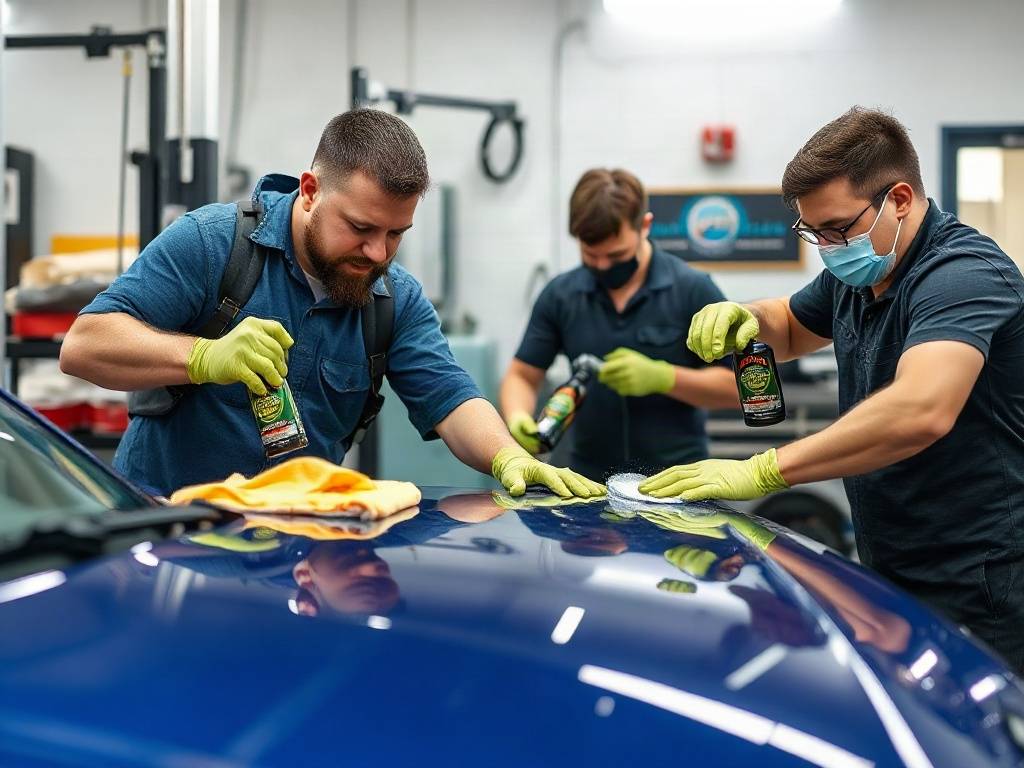
Reverse Engineering Is Not Just About Replication
It is worth making one point very clear.
The purpose of professional reverse engineering should not be understood as blindly copying another company’s product.
A responsible development programme should consider formulation functionality, performance objectives, raw material alternatives and applicable intellectual property considerations.
The analytical information gives the business an understanding of the chemical architecture.
The next step is to make informed formulation decisions.
For example, an ingredient may be replaced because:
- a better-performing alternative is available;
- the original material is too expensive;
- the material is difficult to source;
- the business wants a different environmental profile;
- the formulation needs to be adapted for local conditions;
- a different performance balance is required.
Labsure’s reverse engineering approach specifically combines formulation deconstruction with reconstruction and optimisation rather than treating analytical identification as the end of the project.
Businesses should also obtain appropriate legal advice where intellectual property, patents, trade secrets or other restrictions may be relevant.
The Bigger Opportunity: Build a Product Range, Not Just One Product
For many Australian automotive businesses, the first reverse-engineering project can be the beginning of a larger strategy.
A business may start with one spray wax because it is already proven in its customer base.
Once that product is successfully developed, the same methodology can be applied to a complete range.
For example:
Stage 1
Develop a signature Spray Wax.
Stage 2
Develop a Quick Detailer.
Stage 3
Add a Tyre Dressing.
Stage 4
Develop an Interior Cleaner.
Stage 5
Add a Wheel Cleaner and Iron Remover.
Stage 6
Develop a premium Ceramic Spray.
The result is no longer simply a private-label product.
It becomes an automotive chemical brand.
That is a very different business proposition.
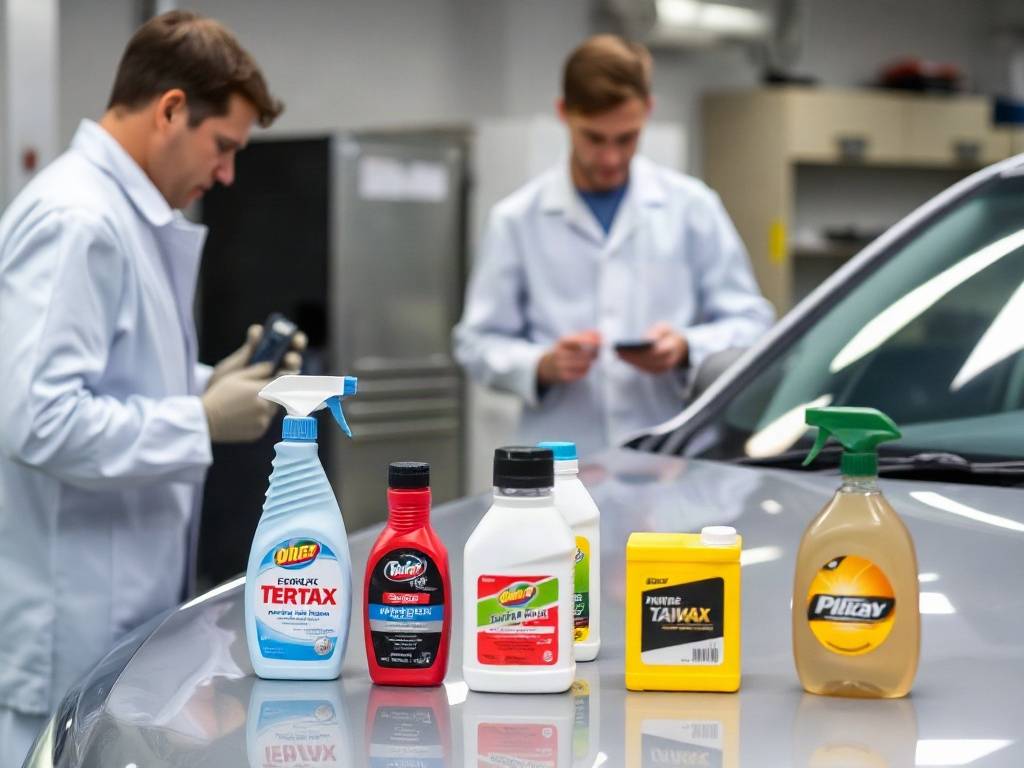
The Practical Development Path for Your Own Automotive Product
If you are an Australian automotive business considering your own branded detailing product, the process does not need to begin with a complicated R&D programme.
A practical starting point can be:
1. Select a benchmark product
Choose a commercially successful product that represents the performance level you want to achieve.
Ideally, choose a product that you already understand from real customer use.
2. Define your target
Tell us what you want to improve.
For example:
- stronger gloss
- better hydrophobicity
- easier wipe-off
- lower residue
- better stability
- lower cost
- different fragrance
- different viscosity
- improved sprayability
3. Submit the reference sample
Labsure assesses the product and determines an appropriate analytical strategy.
4. Reverse engineer the formulation
The laboratory identifies the important chemical components and formulation architecture.
5. Reconstruct the formula
The analytical results are translated into a practical formulation.
6. Optimise it for your business
The formula can then be adjusted around performance, cost, raw materials and production requirements.
7. Produce samples
Pilot samples allow practical performance testing before committing to commercial production.
8. Prepare for manufacturing
Raw materials, mixing procedures, packaging and production requirements are reviewed.
9. Manufacture your own product
Once the formulation has been validated, the product can move into production through your selected manufacturing pathway or contract manufacturing support.
From Someone Else’s Product to Your Own Brand
The most important lesson from this project is simple.
You do not always need to invent a product to own a product.
If you already know what your customers want, you have already completed one of the hardest parts of product development: identifying a market opportunity.
The next challenge is converting that market knowledge into a reproducible formulation.
That is where reverse engineering becomes particularly powerful.
Rather than spending months experimenting with hundreds of possible raw materials, you can begin with a product that has already demonstrated commercial value.
Rather than guessing why it performs well, you can analyse its formulation.
Rather than copying it blindly, you can reconstruct the functional system and then modify it around your own requirements.
And rather than stopping at a laboratory sample, you can continue through raw material selection, production guidance and manufacturing.
For an Australian automotive detailing business, this can create a much more direct path:
Market-Proven Product → Reverse Engineering → Optimised Formula → Pilot Sample → Production → Your Brand
The objective is not simply to make another spray wax.
The objective is to give a business the technical foundation to own its product instead of simply selling someone else’s product.
Thinking About Launching Your Own Automotive Detailing Product?
If you operate an automotive detailing business, workshop, distributor, automotive retailer or e-commerce store in Australia and already have a product you would like to develop under your own brand, you do not necessarily need to start formulation development from scratch.
Labsure can help assess a reference product and determine whether reverse engineering and formulation reconstruction are suitable for your project.
Our automotive formulation services cover reverse engineering, component identification, formulation optimisation, performance improvement and production support.
If you already have a benchmark product, tell us:
- what the product is;
- what you like about its performance;
- what you want to improve;
- your expected production volume;
- your target retail or wholesale price;
- and whether you already have a manufacturer.
We can then assess the most practical development pathway.
Related Labsure Services
Car Care Reverse Engineering
Analyse and reconstruct automotive detailing formulations including spray waxes, quick detailers, wheel cleaners, tyre dressings and protective products.
Chemical Ingredient Identification
Understand the key chemical components and functional structure of an existing product.
Formulation Reverse Engineering
Decode a market-proven formulation and use the analytical results to develop your own production-ready version.
Automotive Detailing Contract Manufacturing
Move from validated formulation to commercial production and your own branded automotive chemical range.
Contact Labsure
If you have a product that you believe could become your next best-selling branded chemical, send us the sample and tell us what you want to achieve.
The fastest route to your own product may not be starting from zero.
It may be starting with something that already works.
Discuss Your Automotive Product with Labsure