There is a big difference between selling a product and owning a product.
A road construction chemical company may already have customers, established relationships with asphalt producers, contractors or distributors, and a good understanding of what the Australian market actually wants.
The problem is often not the market.
The problem is the formulation.
A business may know that a particular anti-stripping additive, asphalt modifier or pavement treatment product performs well. Customers may already be asking for it. The product may have been used successfully on Australian roads for years.
But there is one major limitation:
The business does not own the formula.
It depends on another manufacturer.
Prices can change. Minimum order quantities can increase. Supply can become unreliable. The original manufacturer may change its formulation. An imported product may take weeks to arrive. And if the business wants to create its own brand, there may be no technical foundation from which to start.
This is where reverse engineering can change the economics of product development.
Instead of starting with a blank page and spending months testing hundreds of possible ingredients, an Australian road chemical business can start with something much more valuable:
a product that has already demonstrated commercial performance.
This case study describes an anonymised project involving an Australian road construction chemical business in Victoria that wanted to move from selling or supplying an established road additive to developing its own branded product.
The objective was not simply to identify what was inside the benchmark product.
The objective was to create a practical pathway from a proven market product to an independently manufacturable formulation.
The Business Already Knew What the Market Wanted
The client was not a startup trying to invent a completely new road treatment product.
They already understood their customers.
They knew which type of additive was being requested. They knew the benchmark product had a good reputation in the market. They had seen customers use it successfully and understood the commercial value of the product.
That created an interesting product-development opportunity.
The business essentially had three options.
Option 1: Continue distributing someone else’s product
This was the easiest option technically.
There was no formulation development required, no laboratory program and no manufacturing process to establish.
But the business remained dependent on the original supplier.
The supplier controlled the formulation, supply chain and pricing.
The client could sell the product, but could not truly control the product.
Option 2: Develop a completely new product from scratch
This would give the business more control, but introduced a different problem.
Where should development begin?
An asphalt additive can contain a complex combination of active chemicals, adhesion promoters, polymers, carriers, solvents, stabilisers and other functional components.
Testing random combinations until something works can become expensive very quickly.
More importantly, the client would be trying to solve two problems simultaneously:
- What chemistry works?
- What does the market actually want?
The benchmark product had already answered the second question.
So there was little commercial logic in ignoring that information.
Option 3: Use the successful product as a technical benchmark
This was the approach selected for the project.
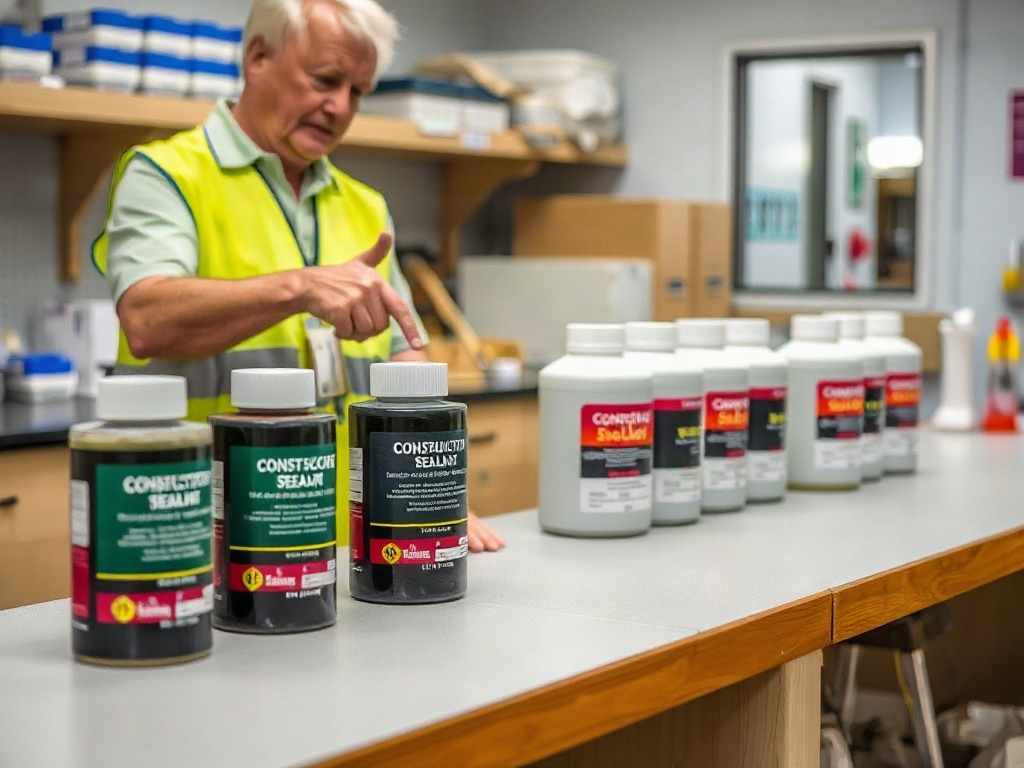
The client supplied a benchmark road additive that was known to perform well in its target application.
The development question became:
Can we understand the formulation structure, identify the performance-critical components, and use that information to develop our own commercially practical formulation?
That is where reverse engineering becomes much more than laboratory analysis.
The Real Objective Was Not to Copy the Product
One of the most important distinctions in this type of project is the difference between copying a product and reverse engineering a formulation.
The objective was not to reproduce every molecule simply because it existed in the original sample.
The objective was to understand the formulation well enough to make informed development decisions.
For an anti-stripping or moisture-damage additive, the important commercial questions are broader than the ingredient list.
For example:
- What chemical system is responsible for improving binder–aggregate adhesion?
- Which components are performance-critical?
- Which components are carriers or processing aids?
- What is the approximate concentration of the active system?
- Is the formulation dependent on a particular specialty raw material?
- Could an alternative raw material provide a similar function?
- Is the product concentrated enough for practical commercial use?
- How stable is it during storage?
- Can it be manufactured consistently at larger scale?
- Can the formulation be adapted to Australian raw material supply?
- Can the cost structure support the client’s target selling price?
These questions turn analytical data into product development.
That distinction is particularly important for an Australian company looking to establish its own brand.
The goal is not simply:
“What is inside this drum?”
The more useful question is:
“What do we need to know about this product to develop our own commercially viable version?”
Starting With a Known Road Performance Target
For the Victorian client, the benchmark product already had commercial credibility.
That created a significant advantage.
Instead of defining performance from zero, the development team could establish the benchmark as a reference point.
The project therefore focused on the characteristics that mattered commercially for a road additive designed to improve adhesion and reduce moisture-related pavement damage.
Depending on the final application, relevant development criteria can include:
Adhesion performance
The additive should support strong adhesion between the bituminous binder and aggregate.
Poor adhesion can become particularly problematic when water enters the pavement system.
Moisture resistance
The formulation should help reduce the loss of binder–aggregate adhesion under moisture exposure.
Performance consistency
The product should not perform well only in one laboratory batch. The formulation needs to be sufficiently robust for repeatable production.
Dosage efficiency
The amount of additive required to achieve the desired effect has a direct impact on product economics.
A highly concentrated formulation may offer logistical advantages, while an inexpensive but inefficient formulation may become expensive at actual application rates.
Storage stability
A road additive that separates, precipitates or changes significantly during storage creates problems for both the manufacturer and the end user.
Manufacturing practicality
The formulation must be capable of being produced repeatedly rather than existing only as a successful laboratory experiment.
Commercial cost
The final formulation needs to make sense economically.
A technically excellent formulation is not necessarily a commercially successful product if its raw material cost is too high.
What Reverse Engineering Added to the Development Process
The benchmark sample was analysed to establish its chemical and formulation structure.
Depending on the chemistry of the product, a reverse engineering program can combine analytical techniques such as FTIR, GC-MS, HPLC, NMR, elemental analysis and other targeted methods.
The objective is not to automatically apply every available instrument.
The analytical program should be selected according to the product and the question being asked.
For a road additive, this may involve investigating:
- organic functional components;
- polymer or resin systems;
- surfactant or adhesion-promoting components;
- solvents or carriers;
- inorganic components;
- elemental composition;
- approximate concentration ranges;
- physical characteristics;
- and differences between the benchmark and development samples.
This approach is consistent with Labsure’s broader chemical reverse engineering service, where analytical information is interpreted in the context of formulation reconstruction and product development rather than being treated as an isolated laboratory result.
The result is a technical map.
It does not necessarily mean that every component can be identified with absolute certainty or that an exact manufacturing recipe can always be recovered from one sample.
Instead, the analysis provides something much more useful for formulation development:
a significantly smaller and better-informed development window.
From a Long List of Chemicals to a Short List of Decisions
This is where the economics of reverse engineering become interesting.
Imagine developing a new road additive without any information about the benchmark.
You may need to investigate different:
- adhesion promoters;
- polymer systems;
- carriers;
- solvents;
- stabilisers;
- emulsification systems;
- concentrations;
- combinations;
- processing conditions;
- and raw material suppliers.
Every failed experiment consumes time and material.
More importantly, every experiment produces another question.
Was the performance poor because the active ingredient was wrong?
Was the dosage too low?
Was the carrier unsuitable?
Was the mixing sequence incorrect?
Was there an incompatibility between components?
Was the product unstable?
Or was the original assumption about the formulation simply wrong?
Reverse engineering does not eliminate development work.
It changes where the development work begins.
Instead of exploring an enormous chemical landscape, the development team can focus on the most likely formulation architecture.
That is often where the real saving occurs.
The Formula Was Then Optimised — Not Simply Reproduced
Once the benchmark formulation structure was understood, the next question was commercial:
Would the original formulation actually be the best formulation for the client’s business?
The answer is not necessarily yes.
A product developed overseas may have been designed around a completely different raw material market.
A specialty ingredient may be inexpensive and readily available to the original manufacturer but difficult or expensive to source in Australia.
Another material may provide a similar functional role at a lower cost.
The client therefore wanted the formulation development process to consider more than chemical similarity.
The new formulation was evaluated around several commercial objectives.
1. Maintain the important performance characteristics
The new product needed to remain competitive with the benchmark in the application characteristics that mattered to customers.
2. Improve raw material flexibility
Where practical, the formulation could be designed around commercially accessible raw materials rather than being unnecessarily dependent on one difficult supplier.
3. Control formulation cost
The objective was not to make the cheapest possible chemical.
The objective was to achieve the required performance at a commercially sensible cost.
4. Improve manufacturing practicality
The formulation needed to be realistic for production.
Mixing sequence, addition order, temperature, dispersion, compatibility and batch consistency all become important once the product moves beyond the laboratory.
5. Leave room for future product development
The client was not only interested in one product.
Once the formulation architecture was understood, it could potentially become the technical foundation for a broader road chemical product range.
This is an important advantage of owning the formulation.
A business can improve the product later rather than remaining permanently dependent on the original supplier.
The Most Important Change: From Product Buyer to Product Owner
This was ultimately the commercial purpose of the project.
Before development, the client had a market opportunity but limited technical control.
After the reverse engineering and formulation development work, the business had a much clearer technical pathway toward its own product.
The transformation can be summarised simply:
Market-Proven Product
↓
Reverse Engineering
↓
Formulation Structure
↓
Performance Targets
↓
Formula Reconstruction
↓
Formulation Optimisation
↓
Raw Material Selection
↓
Pilot Development
↓
Production Guidance
↓
Own Branded Road Additive
That is a very different business model from simply distributing someone else’s product.
Why This Can Be Lower Risk Than Starting From Scratch
There is a common misconception that reverse engineering is expensive because laboratory analysis itself is expensive.
In many projects, the bigger cost is actually uncontrolled trial and error.
Consider the difference.
Starting from scratch
You need to discover:
- what chemistry works;
- what concentration works;
- which ingredients are compatible;
- what performance level is achievable;
- which raw materials are practical;
- and how to manufacture the product.
Starting with a proven benchmark
You already have:
- a known market product;
- an established performance reference;
- a known application;
- customer feedback;
- an indication of acceptable commercial performance;
- and a sample that can be analysed.
The laboratory work does not guarantee a successful product.
But it can significantly reduce the number of unknowns that have to be investigated.
That is why reverse engineering can be particularly attractive to Australian SMEs that have strong market knowledge but limited internal formulation capability.
Raw Materials Become Part of the Product Strategy
Developing a formula is only half of the problem.
You also need to make it.
For a new Australian road chemical brand, raw material selection can have a major impact on the final economics.
A formulation may look excellent on paper but become commercially unattractive because one ingredient:
- has a high minimum order quantity;
- is only available by import;
- has long lead times;
- is subject to inconsistent supply;
- requires expensive freight;
- or is difficult to obtain in the required specification.
This is why raw material sourcing should be considered during formulation development rather than after the formula has already been finalised.
Labsure can also support investigation of supplier materials and raw material verification where a business needs to confirm whether an incoming material is consistent with its expected identity or specification.
For a growing road chemical business, that creates another potential advantage:
the formulation can be designed around the supply chain instead of forcing the supply chain to fit an unrealistic formulation.
From Laboratory Sample to Production
A successful laboratory sample is not automatically a production-ready product.
This is one of the areas where new chemical brands can underestimate the technical challenge.
A 1-litre laboratory batch may behave differently from a 500-litre or 2,000-litre production batch.
Scaling can introduce issues involving:
- mixing energy;
- shear;
- temperature;
- addition sequence;
- dispersion;
- viscosity;
- settling;
- batch time;
- raw material pre-treatment;
- and filling behaviour.
For this reason, production guidance forms an important part of the pathway.
The objective is to establish not only what the formula is, but also how the formula should be manufactured consistently.
For a business without its own chemical manufacturing facility, the next step may be contract manufacturing.
That means the client does not necessarily need to build a factory before launching its own road chemical brand.
The technical pathway can instead move from:
Benchmark Product → Reverse Engineering → Optimised Formula → Pilot Batch → Production Guidance → Contract Manufacturing
This approach allows the business to focus its internal resources on customers, sales, distribution and market development while the technical and manufacturing requirements are progressively established.
What the Client Ultimately Wanted
The most important outcome of this Victorian project was not a laboratory report.
It was greater control.
The client wanted to move toward a situation where it could say:
“This is our product.”
Not:
“This is a product we distribute for someone else.”
That difference matters.
Owning the formulation creates opportunities to:
- establish a proprietary product range;
- control product positioning;
- negotiate manufacturing independently;
- change suppliers when necessary;
- optimise raw material cost;
- develop different grades or variants;
- respond to customer feedback;
- create private-label or branded products;
- and build long-term value around the product rather than simply around distribution.
For an established road chemical supplier, that can be a significant strategic change.
You May Not Need to Invent a New Product
This is perhaps the most useful lesson from the case.
Many Australian businesses believe product development means inventing something completely new.
It does not always work that way.
If you already know that a product sells, that customers want it, and that the product performs well, you already have valuable commercial information.
The question becomes:
How can you turn that market knowledge into your own product?
Reverse engineering provides one possible answer.
You start with a proven benchmark.
You investigate the chemistry.
You identify the important formulation components.
You establish approximate formulation relationships where analytically appropriate.
You reconstruct a working formulation.
Then you improve it.
Perhaps you want a lower-cost version.
Perhaps you want better storage stability.
Perhaps you want different performance characteristics.
Perhaps you want to use Australian-available raw materials.
Perhaps you want to develop several products from the same technical platform.
Or perhaps you simply want to stop depending on another company’s formula.
The benchmark becomes the starting point — not the final product.
A Practical Route for Australian Road Chemical Companies
If you are a road construction chemical supplier, asphalt additive distributor, pavement maintenance company or chemical business considering your own branded product, the first step does not have to be a large R&D program.
Start with one product.
Ideally, it should be a product where you already know:
- customers like the performance;
- there is an established market;
- you understand the application;
- you know approximately what customers are willing to pay;
- and you can obtain a representative benchmark sample.
Then define the commercial objective.
Do you want to:
Match the benchmark?
Reduce cost?
Improve performance?
Replace difficult raw materials?
Develop an Australian-made alternative?
Create your own private-label product?
Develop a broader product range?
The answer determines how the reverse engineering and formulation program should be structured.
This is much more efficient than ordering a large number of laboratory tests without first deciding what commercial decision the results need to support.
From One Road Additive to a Product Range
Once a company has successfully developed its first formulation, the opportunity does not necessarily end there.
The same development model can potentially be applied to other road construction chemicals, including:
- asphalt additives;
- anti-stripping agents;
- adhesion promoters;
- polymer modifiers;
- bitumen modifiers;
- pavement repair compounds;
- crack sealants;
- cold patch products;
- emulsifiers;
- workability additives;
- and other specialised road maintenance chemicals.
Labsure’s road additive service specifically covers formulation analysis and optimisation for areas such as polymer-modified asphalt, elastomeric modifiers, anti-stripping and moisture-damage additives, low-temperature modifiers and pavement repair formulations.
The important point is that each project can begin with a commercial question rather than an instrument list.
The Bottom Line
For an Australian road chemical company, the most expensive part of product development is not always the laboratory analysis.
It is often the uncertainty.
Uncertainty about what is inside the benchmark.
Uncertainty about which ingredients actually matter.
Uncertainty about how much of each component is required.
Uncertainty about whether the formula can be manufactured.
Uncertainty about raw material supply.
And uncertainty about whether months of development work will eventually produce a product customers actually want.
A market-proven benchmark can remove some of that uncertainty.
Reverse engineering can provide the technical starting point.
Formulation optimisation can turn that information into a product designed around the client’s commercial objectives.
Raw material selection can make the formulation more practical.
Production guidance can help move the product beyond the laboratory.
And contract manufacturing can provide a pathway to commercial production without requiring the business to build its own manufacturing facility immediately.
The result is not simply a copy of another company’s product.
The goal is something more valuable:
a formulation your business can develop, control, manufacture and sell under its own brand.
If you already have a road additive, asphalt chemical, pavement treatment or other road construction product that you know works — but you do not have the original formulation — it may be worth analysing the product before starting development from scratch.
You may already have the most useful starting point sitting in a drum.
Want to Develop Your Own Road Chemical Product?
Labsure works with Australian businesses that want to move from an existing market product to their own formulation.
Depending on the project, the development pathway can include:
Reverse Engineering → Formulation Development → Performance Optimisation → Raw Material Selection → Production Guidance → Contract Manufacturing
You do not need to know which analytical techniques are required before contacting us.
Tell us what the product is, what you want to achieve, and what you currently know about the benchmark product. We can review the project and recommend a practical analytical and formulation pathway.
The objective is simple:
Less guessing. Less unnecessary trial and error. More control over your own product.
If you have a proven road chemical that you want to turn into your own branded product, start with the benchmark — and work backwards from there.