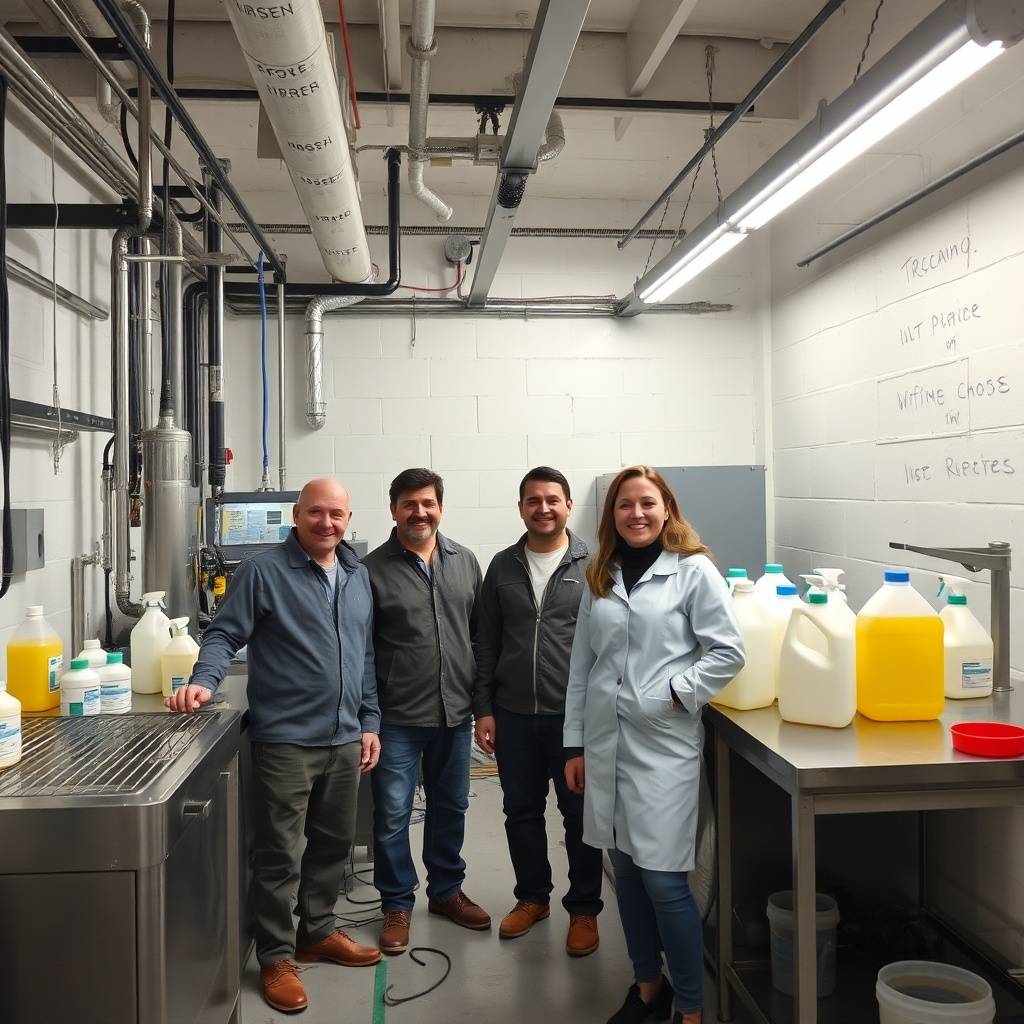
Unlocking Profitability: The Strategic Art of Chemical Formulation Optimization
(H1: Optimizing Formulas for Performance and Price: What Every Australian SME Must Know)
If you run a small to medium-sized enterprise (SME) in the Australian chemical, manufacturing, or specialty product sector, you know the game is tough. You’re not just competing on quality; you’re fighting the triple threat of rising raw material costs, complex Australian regulatory hurdles (AICIS, TGA), and the dreaded “scale-up failure” that sinks profitability.
Your product’s formula is the beating heart of your business. But is that heart healthy? Is it designed for maximum efficiency in an Australian context?
The challenge is universal: how do you maintain high performance that keeps customers loyal while simultaneously controlling escalating raw material costs to secure a competitive price? For Australian SMEs, mastering this balance is not just about growth—it’s about survival.
This is where strategic chemical formulation optimization, guided by local expertise, becomes your most powerful asset. It can unlock significant cost savings, enhance product quality, and accelerate your time-to-market without compromising regulatory compliance.

The Australian SME’s Triple Headache: Why Standard Formulas Fail
Many SMEs start with a fantastic product, only to hit a wall when scaling up. Why? Because the initial formula wasn’t built for the rigours of commercial production or the specifics of the Australian market.
1. The Volatile Supply Chain Squeeze (H3)
- Pain Point: Unlike large multinational corporations with global procurement power, Australian SMEs are highly vulnerable to volatile, long-distance supply chains. Unexpected price spikes for key imported ingredients can instantly wipe out your profit margin.
- The Cost of Inflexibility: Formulas relying on a single, expensive, or hard-to-source raw material leave you exposed.
2. The Hidden Cost of Regulatory Ambiguity (AICIS/TGA) (H3)
- Pain Point: The Australian Industrial Chemicals Introduction Scheme (AICIS) is complex. A simple ingredient change or a slight change in the purpose of your product can trigger mandatory, expensive, and time-consuming introductions or re-registrations.
- The Risk: An unoptimized formula might use an industrial chemical where a simpler, already-listed alternative would suffice, adding unnecessary compliance burden and legal risk.
3. The Scale-Up Disaster (H3)
- Pain Point: The formula that mixes perfectly in a 5-litre lab beaker often separates, foams excessively, or requires hours of mixing in a 500-litre commercial reactor, driving up energy and labour costs.
- The Result: High scrap rates, batch failures, and cripplingly inefficient production cycles.
Optimizing formulas with Labsure means treating the formula as a strategic asset that is robust against supply shocks and fully compliant with Australian law.

Three Strategic Solutions for Australian Formula Optimization
Achieving the ideal balance of performance, price, and local compliance requires a structured, multi-faceted approach.
1. Ingredient De-Risking and Local Substitution (H2)
The most direct route to sustainable cost savings is decoupling your reliance on high-risk, volatile imports where possible.
- Strategic Substitution for Supply Security: This involves identifying high-cost imported components and investigating functionally equivalent alternatives that might be more readily available locally or have a more stable global supply chain. For example, replacing a single, premium emulsifier with a synergistic blend of two common, cost-effective options.
- Labsure’s Edge: We don’t just find a cheaper ingredient; we perform full analytical testing and stability profiling in our local lab to guarantee the substitute meets performance targets and remains stable under Australian climate conditions.
- Concentration Review for Waste Reduction: Challenge the status quo of every ingredient. Are you using an expensive preservative at $2\%$ when scientific analysis proves $1.5\%$ is equally effective?
2. Design of Experiments (DOE) – Your Margin Protection Tool (H2)
For advanced formula optimisation, you must move beyond expensive guesswork. Design of Experiments (DOE) is the scientific tool that saves SMEs thousands.
Instead of the slow, costly “one-factor-at-a-time” method, DOE allows our chemists to simultaneously study the effect of multiple variables—such as ingredient ratios, $\text{pH}$ levels, and mixing temperature—on the final product’s performance and cost.
💡 Real-World ROI for SMEs: DOE minimises the number of costly experimental batches required. It provides a precise map showing the sweet spot where performance is maximised and ingredient cost is minimised. This is how you scientifically validate a cost-saving change before committing to a commercial run.
3. Process Optimisation and Compliance-by-Design (H2)
An optimised formula must translate seamlessly to your Australian manufacturing floor.
- Scaling Up for Australian Conditions: We look beyond the ingredients to the process. Can the formula be mixed faster or at lower temperatures? We help fine-tune process parameters to reduce batch cycle time and minimise energy consumption, directly lowering your production overheads.
- Regulatory Scrutiny: Investment in robust Quality Control (QC) is non-negotiable for cost control. Labsure provides the objective, independent analytical testing necessary to prove that your new, lower-cost formula remains consistent, safe, and fully compliant with AICIS record-keeping and TGA guidelines. We help you design the formula around the compliance requirements, not retro-fit it later.
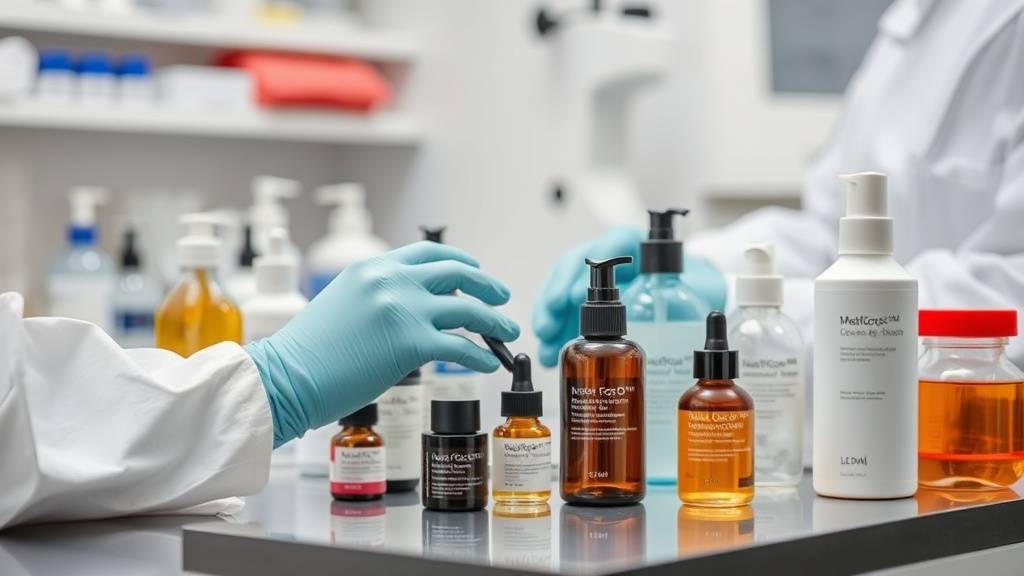
Stop Guessing, Start Gaining: Partnering with Labsure
As an Australian-based laboratory, Labsure understands the unique pressures faced by local SMEs—from the cost of imported raw materials to the nuances of local regulations. We are your technical partner, focused on mitigating risk and increasing your margin through precision chemistry.
We don’t sell chemicals; we sell certainty.
Take the First Step to a More Profitable Formula:
- Confidential Formula Audit: Let us review your current formula and process to identify immediate, compliant cost-saving opportunities—no obligation, just scientific facts.
- Cost-Effective Formulation: Utilise our DOE expertise to scientifically validate a high-performance, lower-cost formula that is robust against supply chain volatility.
- Regulatory Certainty: Gain peace of mind knowing your formulation and testing reports stand up to rigorous Australian regulatory scrutiny.
🚀 Ready to Secure Your Margins and De-Risk Your Business?
Don’t let a poorly optimised formula be the weak link in your business.
👉Simply leave your contact details below, and our expert chemists will be in touch shortly to discuss your Formula Strategy.
Disclaimer: Labsure provides technical testing and formulation services. All businesses are responsible for final compliance with all relevant Australian regulatory bodies, including the ACCC, AICIS, and TGA.