Australia’s lubricant market continues to grow across sectors such as automotive servicing, mining equipment, construction machinery, and industrial manufacturing. For many entrepreneurs and small chemical businesses, launching a private lubricant brand appears attractive — yet many assume the process requires massive investment, complex chemical expertise, or a full-scale refinery.
In reality, the situation is very different.
Many successful lubricant brands operating in Australia today do not produce base oils themselves. Instead, they rely on smart formulation design, specialised additive packages, and efficient blending processes. With the right formulation strategy and technical support, even small companies can develop competitive lubricant products and build profitable brands.
This article explains the practical path to creating your own lubricant line in Australia — including the common challenges of importing finished products, the advantages of local formulation and blending, and how modern analytical services can help businesses design high-performance products without building a full R&D laboratory.
The Challenges of Importing Finished Lubricant Products
Many companies initially enter the lubricant business by importing finished products from overseas manufacturers. While this approach seems simple, it often introduces several operational risks and commercial limitations.
Supply Chain Instability
International logistics disruptions have become increasingly common in recent years. Shipping delays, port congestion, and geopolitical uncertainties can interrupt supply chains unexpectedly.
For lubricant distributors, this can result in:
- delayed deliveries to customers
- inventory shortages during peak demand
- lost contracts due to supply inconsistency
Once customers lose confidence in supply reliability, rebuilding trust can be difficult.
Limited Control Over Product Performance
When importing finished products, businesses often have little insight into the detailed formulation or ingredient composition.
This creates challenges when customers request:
- improved performance
- customised viscosity grades
- compatibility with specific machinery
- adaptation to local climate conditions
Without formulation knowledge, distributors depend entirely on overseas suppliers for product modifications — which can take months or may not be possible at all.
Rising Costs and Reduced Margins
Freight costs, import duties, storage, and currency fluctuations all influence the final cost of imported lubricants.
As a result:
- profit margins can become unstable
- pricing flexibility is limited
- distributors struggle to compete with established brands
For many companies, these issues eventually lead to the same question:
Would it be better to develop and manufacture lubricant products locally?

Why Many Lubricant Products Are Easier to Manufacture Than People Think
A common misconception is that lubricant production requires complex chemical synthesis facilities.
In reality, most lubricant products are blended formulations.
This means they are produced by combining several components, typically including:
- base oils
- viscosity modifiers
- anti-wear additives
- corrosion inhibitors
- antioxidants
- detergents or dispersants
The manufacturing process itself often involves controlled blending, heating, mixing, and filtration.
Compared with industries such as pharmaceuticals or polymer synthesis, lubricant production equipment is relatively straightforward.
Typical blending facilities may include:
- mixing tanks
- heating systems
- circulation pumps
- filtration units
- filling and packaging lines
Because of this, many lubricant businesses focus their investment on formulation development and quality control, rather than heavy chemical manufacturing infrastructure.
The Real Barrier: Technical Formulation Knowledge
While manufacturing may be relatively simple, formulation expertise remains the key challenge.
Designing a lubricant that performs reliably requires careful balancing of multiple parameters, including:
- viscosity behaviour under temperature variation
- oxidation resistance
- wear protection
- compatibility with seals and metals
- stability during storage and transport
Without experienced chemists or formulation specialists, many new entrants struggle to design products that meet industry expectations.
Building an internal R&D laboratory can also be expensive, requiring:
- analytical instruments
- trained chemists
- formulation testing equipment
- long development cycles
For many small and medium-sized companies, this investment is unrealistic during the early stages of building a brand.
Fortunately, there is another option.
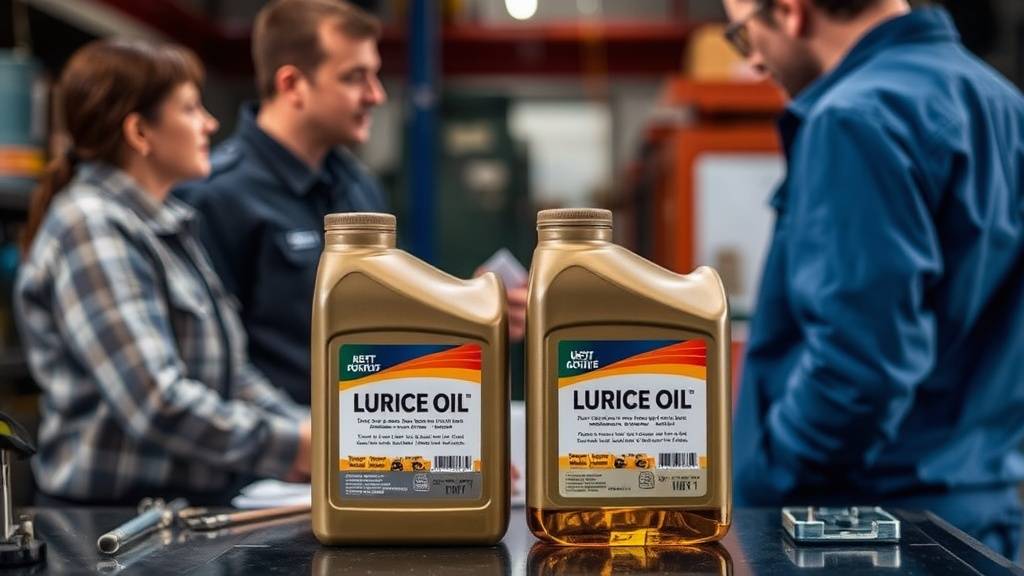
Working With Third-Party Formulation Experts
Instead of developing everything internally, many lubricant companies choose to collaborate with specialised laboratories that focus on chemical composition analysis and formulation development.
These independent laboratories provide services such as:
- ingredient identification
- compositional profiling
- additive system evaluation
- formulation optimisation
- performance benchmarking
By analysing existing market products and understanding their chemical structure, laboratories can provide valuable insights into how successful lubricant formulations are built.
This knowledge allows businesses to design their own products with:
- comparable performance characteristics
- optimised ingredient ratios
- improved cost efficiency
- better suitability for specific markets
Most importantly, companies gain technical understanding of their products rather than relying entirely on suppliers.

Designing Lubricant Products That Fit the Australian Market
Australia presents unique operating conditions for lubricants.
Equipment frequently operates under:
- high ambient temperatures
- dusty environments
- heavy mechanical loads
- long maintenance intervals
Because of this, lubricant products designed for other regions may not always perform optimally in Australian conditions.
With formulation insight and analytical data, businesses can refine products to better suit local applications, such as:
- mining machinery lubrication
- agricultural equipment oils
- industrial gear oils
- hydraulic fluids for construction equipment
- automotive engine oils adapted to climate conditions
These adjustments can significantly improve product reliability and customer satisfaction.

Faster Product Development Through Composition Analysis
When developing a new lubricant product, companies often face a difficult choice:
- spend years experimenting through trial-and-error
- or attempt to design a formulation completely from scratch
Both approaches can be slow and costly.
Modern analytical chemistry provides a more efficient path.
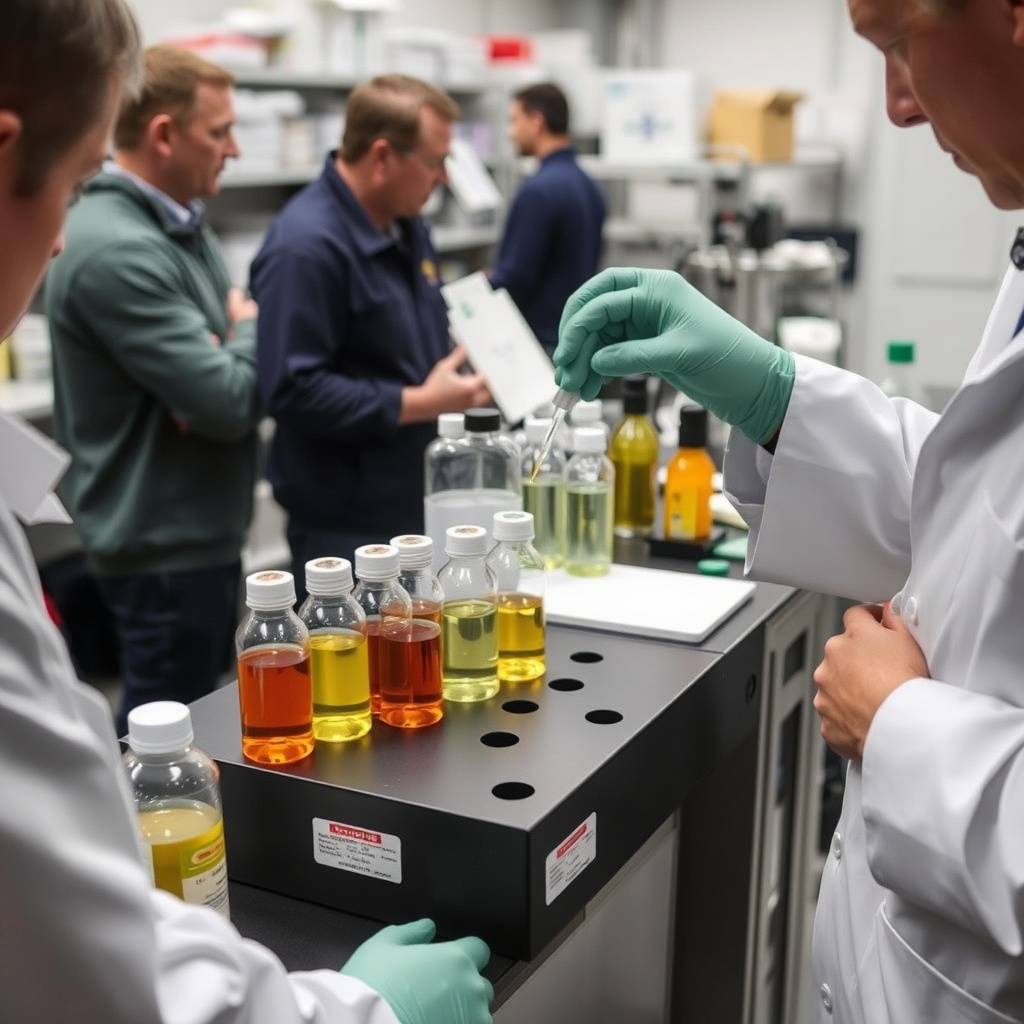
By studying the composition and functional components of established market products, laboratories can identify:
- base oil types
- additive families
- performance modifiers
- stabilisation systems
This technical insight dramatically shortens development timelines.
Once the formulation structure is understood, it becomes possible to refine ingredient ratios and adapt the product for specific performance goals.
For example, a lubricant can be optimised to:
- improve thermal stability
- extend equipment protection
- reduce additive cost
- enhance compatibility with certain machines
The result is a formulation that is both competitive and tailored to the target market.
Lower Investment Requirements for New Lubricant Brands
Another major advantage of local blending is the relatively moderate investment required.
Compared with building a chemical synthesis plant, lubricant blending operations can often be established with:
- modest equipment investment
- manageable facility requirements
- flexible production capacity
This allows businesses to scale gradually as demand grows.
Many successful lubricant brands begin with small production volumes and expand their facilities only after establishing stable market demand.
Higher Profit Margins and Greater Control
Local formulation and blending also provide significant commercial advantages.
When companies control their own product formulations and production processes, they gain:
- pricing flexibility
- stable product availability
- faster product improvement cycles
- stronger technical support for customers
Because the supply chain is shorter, businesses are less vulnerable to international disruptions.
In addition, profit margins are often significantly higher compared with simply importing finished products.
Building a Competitive Lubricant Brand
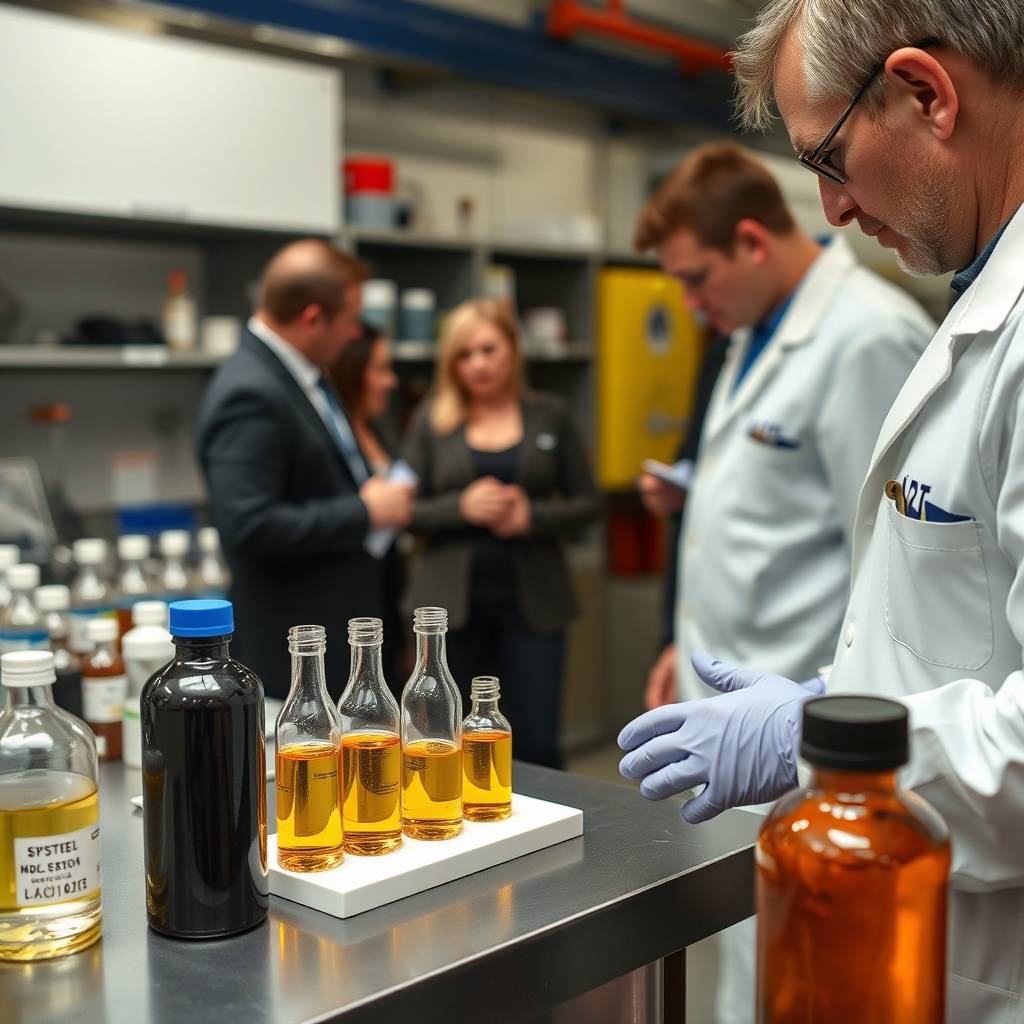
Launching a successful lubricant brand involves more than just manufacturing a product.
Companies must also focus on:
- brand positioning
- product reliability
- technical documentation
- customer support
- distribution networks
However, having a strong and well-designed formulation is the foundation of the entire business.
With the right technical support and formulation insight, new brands can compete confidently alongside established products in the market.
Final Thoughts
The lubricant industry in Australia offers significant opportunities for entrepreneurs and chemical businesses willing to take a strategic approach.
Importing finished products may seem convenient at first, but it often limits flexibility, profitability, and supply security.
Developing your own lubricant formulations — supported by professional analytical and formulation expertise — allows businesses to create products tailored for Australian conditions while maintaining full control over production and supply.
With modern analytical technologies and experienced formulation partners, it is entirely possible to design high-quality lubricant products without building a large internal R&D laboratory.
For companies looking to build a long-term presence in the market, this approach offers a practical path toward innovation, profitability, and brand independence.