This article is for general informational purposes only and does not constitute legal advice. Labsure is a technical testing laboratory, not a law firm. Businesses should seek independent legal counsel before making commercial or manufacturing decisions.
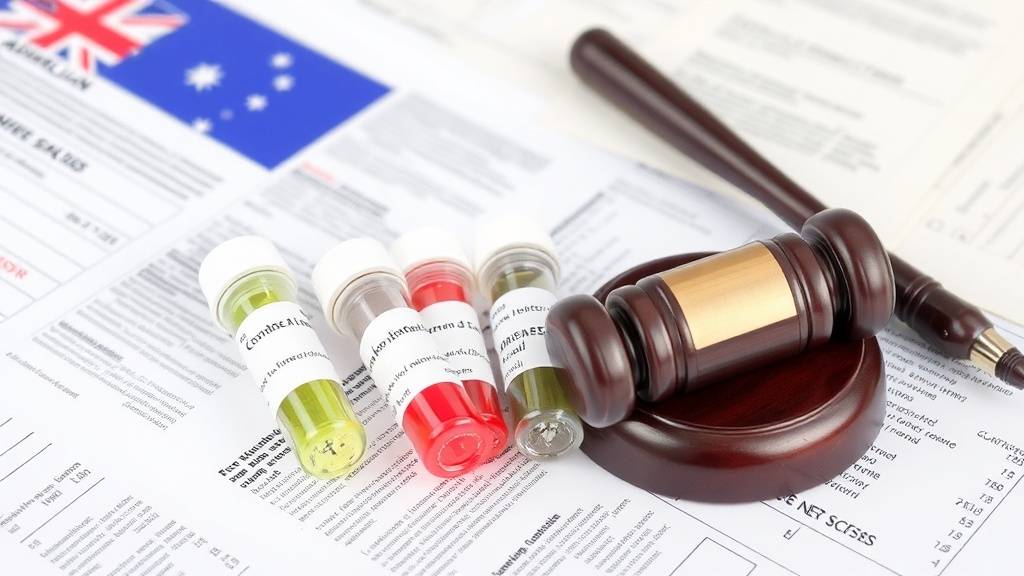
Understanding Formula Analysis and Its Purpose
Formula analysis — sometimes called deformulation or composition analysis — is a powerful R&D tool used across industries such as cleaning, cosmetics, coatings, and personal care.
It allows manufacturers to understand the structure, ingredients, and performance characteristics of a market product to guide their own research and innovation.
At Labsure, we view formula analysis as part of responsible product development, helping businesses:
- Benchmark product quality and ingredient performance
- Investigate raw material composition or unknown residues
- Improve formulation stability, safety, or cost efficiency
- Support compliance with Australian standards (NICNAS / AICIS)

What Formula Analysis Is Not
While scientific analysis is legal and essential for innovation, it must be carried out within clear ethical and intellectual property boundaries.
Formula analysis does not mean:
- Copying another brand’s product for commercial sale
- Reproducing proprietary materials or trade secrets
- Circumventing valid patents or design protections
Responsible laboratories, including Labsure, perform all testing under strict confidentiality and ethical guidelines.
The purpose is to inform research and understanding, not to enable unauthorised product reproduction.
Intellectual Property Awareness in Australia
Australia’s intellectual property (IP) framework includes patents, trademarks, designs, and confidential information.
Businesses conducting R&D must ensure they respect these rights, especially when studying or taking inspiration from existing products.
Before any commercialisation, companies should:
- Conduct a patent and IP search via IP Australia
- Seek professional legal advice on freedom-to-operate
- Register their own IP rights where applicable
- Ensure honest marketing and clear brand differentiation
Labsure provides technical insights to support innovation — but clients are fully responsible for confirming legal and regulatory compliance before manufacturing or sale.

Responsible Innovation: How Labsure Supports Ethical R&D
At Labsure, our role is to decode formulation information for scientific and quality understanding.
We never promote or encourage replication of competitor products.
Our laboratory services may include:
- Analytical breakdown using GC-MS, HPLC, FTIR, and ICP-OES
- Identification of functional ingredients and performance drivers
- Guidance for improving product safety, stability, or cost efficiency
- Technical recommendations to support new product development
Each project is carried out under a confidentiality agreement, with clear documentation confirming:
- The sample’s legal and ethical source
- The intended use of results (for R&D only)
- The client’s responsibility for commercial compliance

Building Safer, Stronger, and More Compliant Products
Innovation doesn’t have to mean imitation.
By understanding the chemistry behind existing formulations, businesses can develop their own unique, compliant, and market-ready products — built on data, not on risk.
Labsure empowers Australian manufacturers, importers, and entrepreneurs to:
- Validate their own formulations
- Replace unavailable ingredients with compliant alternatives
- Improve sustainability and reduce hazardous materials
- Strengthen their product documentation and regulatory readiness

Key Takeaway
Formula analysis is a legitimate and valuable scientific process — but how you use the results determines the legal outcome.
With the right safeguards and independent legal guidance, Australian businesses can innovate confidently and ethically.
Disclaimer
Labsure Pty Ltd conducts chemical analysis and formulation research for technical and R&D purposes only.
All test results and insights are provided for informational use.
Clients are solely responsible for ensuring their own legal and regulatory compliance in commercial applications.