
Sydney Skincare Startup Recreates a Benchmark Serum Through Cosmetic Reverse Engineering
Full Case Narrative
A skincare startup based in Sydney wanted to launch a hydrating facial serum inspired by a premium international brand that had already proven successful in the Australian market.
The founders understood the market demand but had no access to the original formulation and lacked in-house R&D capability. Developing a formula entirely from scratch would require extensive trial-and-error work, increasing both development time and financial risk.
To accelerate product development, the client supplied a benchmark product purchased from the market and requested cosmetic formulation analysis and reverse engineering.
Their goal was not to copy the product exactly, but to understand the functional ingredient system behind the formulation — including humectants, emollients, stabilisers, and preservative systems — and reconstruct a practical formula suitable for small-batch manufacturing.
By using reverse engineering as the starting point, the startup aimed to launch a pilot product quickly, validate market demand, and refine the formulation later based on customer feedback.
Labsure’s Approach
Benchmark Product Analysis
The reference serum was analysed using advanced techniques including GC-MS and LC-MS to identify key components such as humectants, botanical extracts, emulsifiers, and stabilisers.
Functional Ingredient Mapping
Instead of simply listing ingredients, Labsure reconstructed the functional architecture of the formulation, identifying hydration boosters, texture modifiers, and preservative systems.
Practical Formula Reconstruction
Based on analytical data, a manufacturable reference formulation was developed, ensuring ingredient availability and compatibility with small-scale cosmetic production.
Pilot Batch Manufacturing Strategy
We advised the client on a small-batch production approach, allowing them to produce a limited quantity of the serum for market testing before committing to large-scale manufacturing.
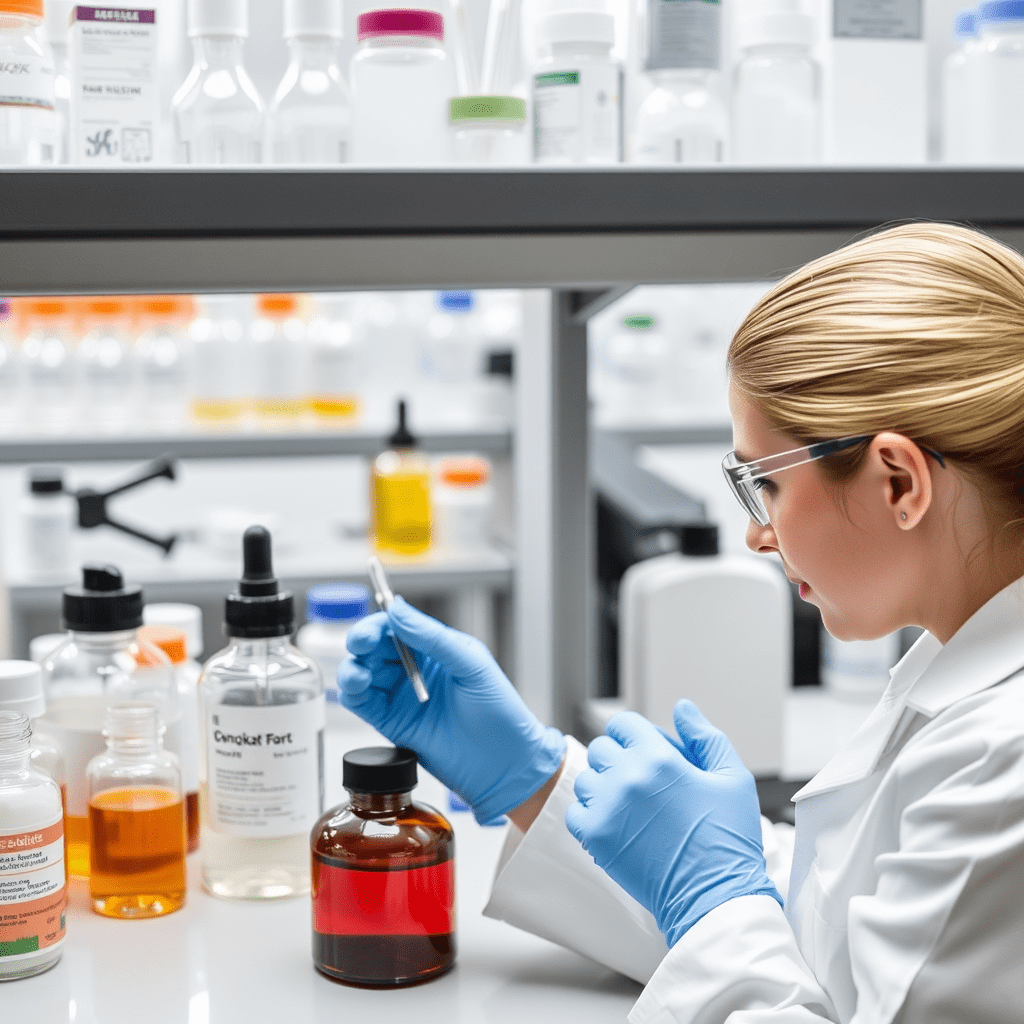
From Benchmark Product to Market Test — Low-Risk Cosmetic Development Through Reverse Engineering
Faster Product Development
Reverse engineering eliminated months of trial-and-error formulation work.
Lower R&D Investment
The startup avoided costly laboratory experimentation by analysing a proven market product.
Controlled Market Testing
Small-batch manufacturing allowed real customer validation before scaling production.
Flexible Product Optimisation
Customer feedback from the pilot launch helped guide packaging and formula refinement.