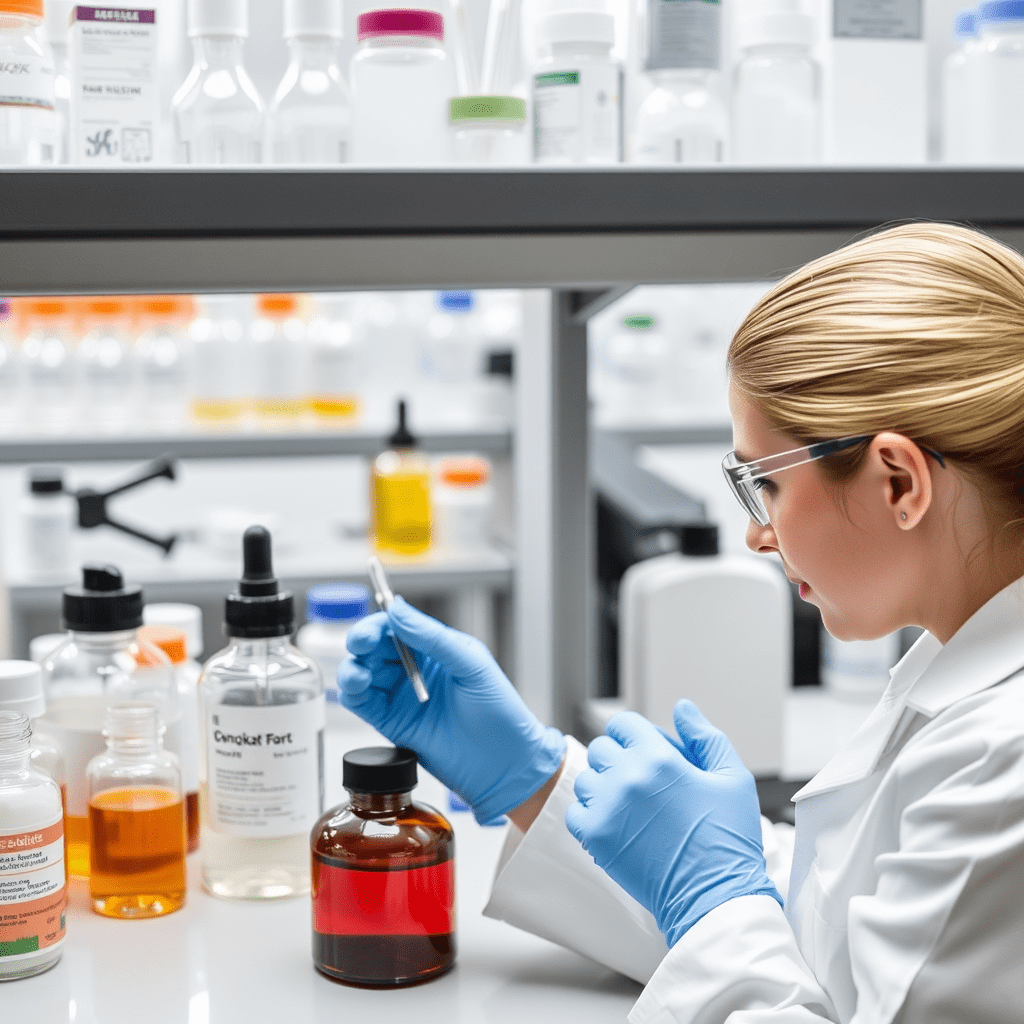
Adelaide Hills Serum Maker Confirms Niacinamide & Bakuchiol Levels with Labsure Testing
Full Case Narrative:
A boutique skincare manufacturer based in Adelaide Hills, South Australia, had launched a small-batch facial serum claiming active ingredients such as 5% niacinamide and 0.5% bakuchiol. While the formulation was developed in-house, the founders were uncertain if the raw materials they received—and their production process—were delivering consistent, verified actives.
They began receiving customer feedback suggesting the serum “wasn’t as effective as before.” Without in-house analytical capability, they risked losing product credibility and valuable shelf space in local eco-retailers.
Labsure’s Approach:
Sample Collection: Three production batches were submitted.
Ingredient Quantification: Labsure applied LC-MS/MS to detect and quantify niacinamide and bakuchiol levels.
Result Analysis:
Batch 2 contained only 2.3% niacinamide, significantly lower than the 5% claim.
Bakuchiol content was also inconsistent across batches.
Root Cause Review: Raw ingredient degradation due to prolonged exposure to heat during filling was identified as a key contributor.
Outcome:
With verified data in hand, the client:
Switched to a more stable raw bakuchiol supplier.
Adjusted manufacturing temperature to under 40°C.
Updated their label to reflect verified actives.
Restored trust with retailers and consumers.
"Verified Actives, Consistent Efficacy"—How Labsure Helped an Artisan Brand Regain Trust
Through LC-MS/MS testing, we helped a small-batch serum maker quantify their niacinamide and bakuchiol levels, detect formulation drift, and correct quality issues from both supplier and process.