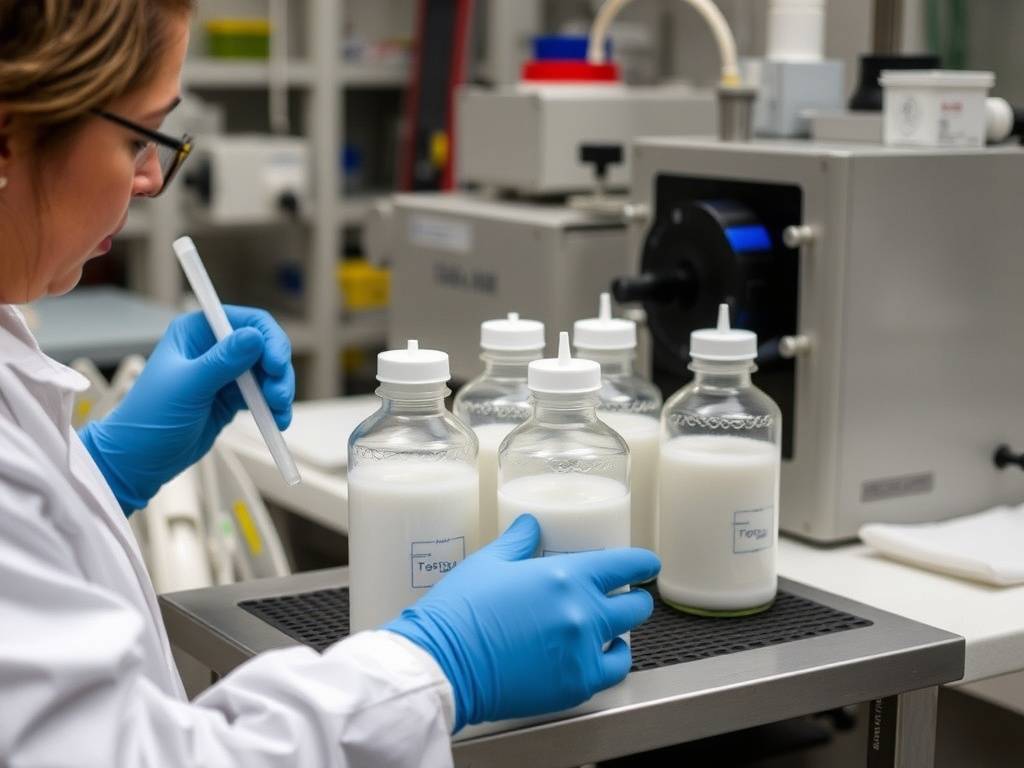
The Australian industrial chemical landscape is vital to the nation’s economy, driven by innovation, manufacturing, and international trade. For Small and Medium-sized Enterprises (SMEs) engaged in chemical production or import, navigating the regulatory environment is not just a matter of compliance, but a strategic necessity. The Australian Industrial Chemicals Introduction Scheme (AICIS), established in 2020, replaced the former NICNAS (National Industrial Chemicals Notification and Assessment Scheme) to regulate the introduction (importing or manufacturing) of industrial chemicals in Australia, focusing on protecting human health and the environment.
This comprehensive guide is tailored for Australian SMEs, providing a clear, step-by-step pathway through the AICIS registration process, ensuring your business stays compliant, operational, and poised for growth.
Understanding the AICIS Mandate: Why Your SME Must Register
Before diving into how to apply, it’s crucial to understand why AICIS registration is mandatory for your business.
What is an ‘Industrial Chemical Introduction’?
In AICIS terms, an ‘introduction’ is defined as either importing an industrial chemical into Australia or manufacturing an industrial chemical in Australia for commercial purposes. This covers a broad spectrum of products and ingredients, including:
- Chemicals used in manufacturing (e.g., plastics, mining, construction).
- Ingredients in paints, adhesives, inks, and detergents.
- Ingredients found in cosmetics, personal care products, and soaps.
Crucially, registration is mandatory for the business (the ‘introducer’), not for the individual chemicals or products. If your SME imports or manufactures commercial products containing industrial chemicals (even if they are just ingredients), you likely need to register.
Key Takeaways for SMEs:
- Commercial Purpose: If you’re importing or manufacturing for commercial sale (even a tiny profit), you must register. Hobby or personal use is typically exempt.
- Ingredients Matter: Even if you only import finished products like cosmetics, the chemical ingredients within them are industrial chemicals and trigger the requirement for your business to register.
- Annual Requirement: AICIS registration is annual, running from 1 September to 31 August each year. You must be registered before you introduce any industrial chemicals in that registration year.
📝 Step-by-Step Guide to AICIS Registration for SMEs
The registration process is managed through the AICIS Business Services online portal. Follow these steps to ensure a smooth application.
Step 1: Create an AICIS Business Services Account
The journey begins online.
- New Users: Navigate to the AICIS Business Services portal and click ‘Sign up’ to create an account.
- Required Information: You will need your Australian Business Number (ABN) to register. Non-Australian businesses will require an Australian Registered Body Number (ARBN).
- Acknowledge and Agree: Read and accept the disclaimer to proceed.
Step 2: Determine the Value of Your Industrial Chemical Introductions
Your registration level and the associated fee are directly tied to the total value of industrial chemicals your business introduced in the previous Australian financial year (1 July to 30 June).
- What to Calculate: This is the total value (in Australian Dollars) of the industrial chemicals you either imported (CIF cost) or manufactured, not the value of the finished products they are in.
- New Businesses: If you are a new SME that did not introduce any industrial chemicals in the previous financial year, your value is $0.
- Documentation: You must be able to back up this figure with commercial documents (invoices, purchase orders, customs records, etc.) and you must keep these records for at least 5 years.
Step 3: Select Your Registration Level and Pay the Fee
Based on the value you determined in Step 2, you will be placed into one of the eight registration levels. These levels are tiered, with higher introduction values corresponding to a higher level and a higher fee.
- Level Determination: The online portal will guide you based on the dollar value you enter.
- Fee Structure: The registration cost typically consists of a low flat fee paid by all introducers, plus a charge that varies according to your registration level. AICIS provides a dedicated tool (“How Much is My Registration Fee?”) to help you estimate this cost.
- Timing is Key: AICIS does not offer pro-rata registration. Even if you register partway through the registration year (1 September – 31 August), you must pay the full fee. Your registration starts the day you complete the process and expires on 31 August.
Step 4: Categorise Each Chemical Introduction
Once your business is registered, your compliance journey shifts to the chemicals themselves. Every single industrial chemical your SME introduces must be authorised under one of the five AICIS introduction categories. This is the most complex part of the scheme, and where SMEs often face challenges.
The five categories, which assess the risk a chemical poses to human health and the environment, are:
- Listed Introductions: For chemicals already on the Australian Inventory of Industrial Chemicals (the Inventory). These are chemicals that AICIS has already assessed and determined can be introduced without further assessment, provided all Inventory terms are met.
- SME Action: Check the Inventory using the chemical’s CAS number or name. If listed, you typically have minimal further obligations beyond record-keeping.
- Exempted Introductions: For chemicals that pose a very low risk, such as chemicals introduced in very small volumes or polymers of low concern.
- SME Action: You must meet specific criteria and keep detailed records to prove the chemical qualifies for this category.
- Reported Introductions: For chemicals that pose a low risk, such as those introduced in low volumes or specific types of polymers. This category requires an annual declaration and record-keeping, but also involves submitting a one-off post-introduction report for the first time it is introduced.
- SME Action: This is a common category for SMEs. The key is meticulous record-keeping, as volume limits often apply, and you must submit a Post-introduction Report online.
- Assessed Introductions: For chemicals that pose a medium to high risk and are not on the Inventory. These require an assessment certificate before they can be introduced.
- SME Action: This is a significant undertaking, requiring a formal application, submission of detailed scientific data, and payment of a substantial fee.
- Commercial Evaluation Authorisations: For chemicals being imported or manufactured to test the market before a full assessment is conducted.
- SME Action: This is a temporary authorisation and is rarely the first step for most SMEs.
Self-Categorisation is Mandatory: Your SME must be able to self-categorise every chemical you introduce. AICIS provides a helpful Categorisation Guide and decision tools online. For low-volume and specialised introductions common to SMEs, careful reading of the Reported and Exempted category details is vital, as this is where compliance traps often lurk.
Step 5: Fulfill Annual Compliance Obligations
AICIS compliance is not a one-time event; it is an ongoing responsibility.
- Record-Keeping: You must maintain detailed records (commercial documents, test data, safety information) to prove that every chemical introduction was correctly categorised and that your business met all relevant obligations (such as volume limits). Records must be kept for at least 5 years.
- Annual Declaration: Every registered business must submit an Annual Declaration by 30 November (for the preceding registration year of 1 September to 31 August). This declaration confirms that:
- Your business was registered.
- All your chemical introductions were correctly authorised (categorised).
- You have met all record-keeping requirements.
- Renewal: Your business registration must be renewed annually by 31 August to continue introducing industrial chemicals in the new registration year. The renewal process is similar to the initial registration, requiring you to update the value of your previous year’s introductions.
🛡️ AICIS Compliance Traps & Strategic Advice for SMEs
Navigating complex regulations can be challenging for resource-limited SMEs. Be aware of these common pitfalls:
| Compliance Trap | Strategic Advice for SMEs |
| Ignoring Ingredients: Assuming a finished product (e.g., imported shampoo) doesn’t require registration. | Know Your Supply Chain: Insist on getting the full Ingredient Disclosure/Safety Data Sheets (SDS) from your suppliers. Every ingredient is a potential industrial chemical. |
| Miscalculating Value: Incorrectly calculating the value of introduced chemicals, leading to the wrong registration level. | Use CIF Value: For imports, ensure you use the Cost, Insurance, and Freight (CIF) value. Use relevant commercial invoices as proof. |
| Poor Record-Keeping (Especially for Exempted/Reported): Relying on general business records rather than specific chemical documentation. | Create a Dedicated AICIS Folder: Maintain a separate, highly organised digital folder for all chemical SDS, Categorisation Decisions, Commercial Invoices, and the Annual Declaration confirmation. |
| Missing the Annual Declaration: Forgetting the Annual Declaration after the renewal fee is paid. | Set a Recurring Reminder: The Annual Declaration deadline (30 November) is separate from the renewal deadline (31 August). Set a recurring reminder in your business calendar. |

🔑 Key AICIS Resources for SMEs
The AICIS website is an invaluable resource that every SME should bookmark.
- AICIS Business Services Portal: For creating an account, registration, renewal, and submitting the Annual Declaration.
- The Australian Inventory of Industrial Chemicals: The first and most critical tool for categorising your chemical introductions.
- The Basics of Importing and Manufacturing Chemicals: A quick outline and decision tool to help you work out if you need to register.
- AICIS Contact Details: If you are ever unsure, it is best to contact AICIS directly for guidance:
- Phone: 1800 638 528
- Email: applications@industrialchemicals.gov.au

Conclusion: Compliance as a Competitive Edge
For SMEs in the chemical industry, AICIS registration is more than just a bureaucratic hurdle; it is a foundational step towards legitimacy, safety, and commercial opportunity in the Australian market. By understanding the annual registration cycle, accurately determining introduction values, and diligently categorising every chemical you introduce, your business can confidently navigate the regulatory environment.
Compliance fosters consumer trust, protects your employees and the environment, and prevents costly penalties. Embrace the AICIS process not as an obstacle, but as a commitment to best practice that positions your SME for long-term success.