Car detailing brands operate in an increasingly competitive environment. Customers expect high-performing products that clean efficiently, protect surfaces, and enhance appearance without damaging vehicle materials. At the same time, manufacturers must comply with chemical regulations, maintain consistent quality, and innovate quickly.
Third-party laboratory formulation analysis has become a strategic tool that supports these goals. By using independent analytical services, companies can deepen their understanding of market products, improve their own formulations, and accelerate development cycles. This article explains how third-party labs contribute to the creation of high-performing car detailing products and why more manufacturers—especially small and medium-sized enterprises—are integrating laboratory analysis into their R&D workflows.
What Is Third-Party Laboratory Formulation Analysis?
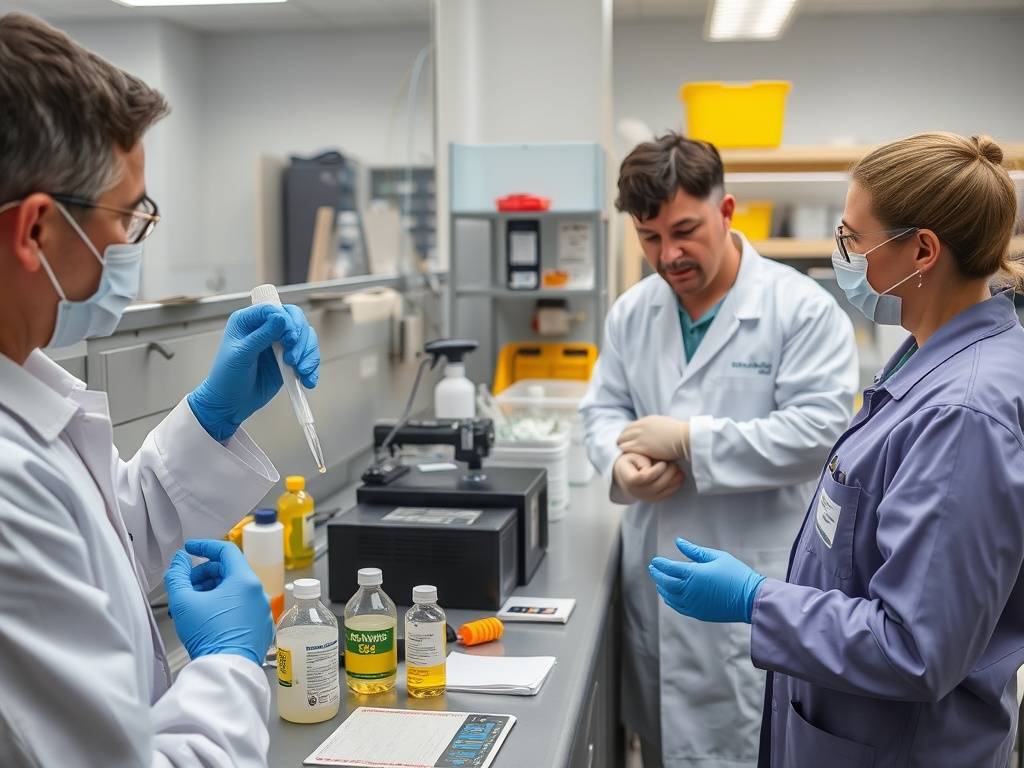
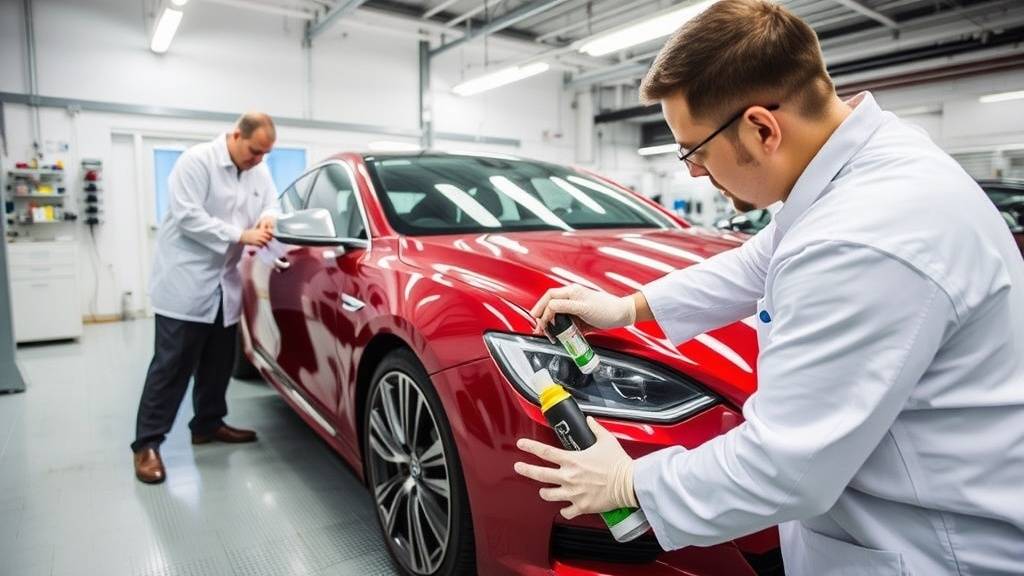
Formulation analysis refers to the scientific examination of a product’s chemical composition. A third-party laboratory performs this analysis independently, without involvement in the original manufacturing process.
Professional laboratories apply techniques such as chromatography, spectroscopy, microscopy, titration, pH analysis, rheology testing, and active ingredient quantification. These methods allow chemists to identify what a formula contains and how much of each component is present.
For car detailing products, laboratories often analyse:
- Car shampoos and snow foams
- Ceramic coatings, waxes, and sealants
- Degreasers and all-purpose cleaners
- Interior cleaners, leather care products, and dressings
- Wheel and tire cleaners
- Glass cleaners and water repellents
Reliable laboratory work helps companies understand a product at the molecular and functional levels, enabling clearer decision-making during product development.
Why Car Care Manufacturers Use Laboratory Analysis
Better Understanding of Market Benchmarks
Car care markets evolve quickly. Brands continually release new foams, coatings, and cleaners with improved features such as stronger hydrophobicity, faster drying, safer pH levels, and enhanced gloss performance. Third-party labs help manufacturers understand the formulation strategies behind these features, including:
- Surfactant systems used in car shampoos
- Solvent blends used in degreasers
- Polymer and silica systems in ceramic coatings
- Emulsion structures in dressings and interior products
Understanding technical trends enables companies to design competitive products without guessing or over-relying on trial-and-error methods.
Accelerating Internal R&D
Developing car detailing products often requires multiple rounds of testing. A third-party lab provides analytical data that supports fast iteration.
For example:
- If a shampoo lacks sufficient foam stability, a lab can analyse the competitor formula and reveal the surfactant balance that produces better results.
- If a wheel cleaner shows uneven performance, the lab can determine whether the chelating system or solvent percentage is limiting effectiveness.
- For ceramic coatings, the lab may evaluate solids content, silica type, viscosity, and carrier solvents to guide reformulation.
Instead of long trial cycles, the manufacturer can revise formulations more confidently and bring products to market sooner.
Quality Control and Consistency
Any brand aiming for long-term customer trust must maintain consistent product quality. Third-party labs support quality control by:
- Verifying raw material identity
- Checking formulation ratios
- Measuring pH, viscosity, density, and active content
- Troubleshooting unexpected product behaviour
This ensures that every batch delivered to distributors and consumers performs as intended.
Key Applications in Car Detailing Product Development
Market Benchmarking and Reverse Engineering
Benchmarking is one of the most common reasons companies engage third-party laboratories. The goal is not to copy a product but to understand how high-performing market products achieve their results.
For car detailing brands, benchmarking can answer questions such as:
- What surfactants are responsible for extreme foam density?
- Which polymers contribute to long-lasting hydrophobic effects?
- What solvents are used to dissolve heavy grease without harming paint?
- How do interior or leather cleaners maintain material safety while delivering strong cleaning power?
These insights guide R&D teams in developing their own differentiated formulas that meet or exceed market expectations.
Ingredient Identification and Quantification
Independent laboratories can identify major and minor ingredients within a formula. This capability is particularly useful when companies want to:
- Validate supplier claims
- Investigate raw material substitutions
- Optimise cost structure without sacrificing performance
- Ensure that products remain compliant with chemical regulations
Quantitative analysis—knowing the approximate percentage of each major component—helps R&D teams determine whether their own formula ratios are appropriate.
Performance Correlation and Troubleshooting
When a car detailing product underperforms, the underlying cause is not always obvious. Laboratories can correlate performance issues with specific formulation parameters.
Examples include:
- Low gloss in a dressing caused by insufficient silicone solids
- Weak cleaning power due to an unbalanced surfactant system
- Streaking in glass cleaners linked to solvent evaporation rates
- Inconsistent ceramic coating hardness due to varying solids content
Analytical troubleshooting reduces guesswork and supports faster resolution.
Reformulation and Product Optimisation
Once benchmark data and internal performance tests are combined, manufacturers can optimise formulations with greater precision.
Optimisation objectives may include:
- Increasing foam stability
- Enhancing lubricity to reduce swirl marks during washing
- Improving hydrophobic performance of coatings and sealants
- Adjusting pH to ensure material safety
- Reducing cost while maintaining functional performance
- Improving product aroma or appearance
Third-party labs provide the technical foundation needed for these improvements.
Supporting Innovation and New Product Categories
Car detailing markets are expanding into new product categories such as graphene-enhanced coatings, enzyme-based cleaners, bio-based dressings, and waterless washing solutions.
Independent labs help manufacturers validate these innovations by:
- Characterising new functional materials
- Testing compatibility with existing ingredients
- Evaluating stability, shelf life, and safety
- Measuring performance advantages compared to conventional formulas
This allows companies to introduce credible, science-supported innovations rather than relying solely on marketing claims.
Benefits for Small and Medium-Sized Car Care Brands
Laboratory analysis is not only for large corporations. Many small and medium-sized car detailing brands benefit from outsourcing analytical work because:
- They may not have in-house chemical laboratories
- They can gain access to high-end instruments without major capital expenditure
- Outsourced analysis reduces the risk of costly R&D mistakes
- Data-driven product development improves competitiveness against larger brands
- Professional reports support better communication with suppliers and manufacturers
SMEs can leverage laboratory partnerships to operate at a more advanced technical level while maintaining lean operations.
Choosing a Third-Party Laboratory: What to Look For
When selecting a laboratory, car care brands should consider:
Technical Capabilities
Ensure the lab has analytical tools suited to automotive chemical products, including chromatography, spectroscopy, particle-size analysis, rheology testing, and wet chemistry capabilities.
Experience with Surfactants, Polymers, and Coatings
Car detailing products involve complex chemistries. The lab should understand surfactant systems, solvents, silicones, waxes, polymers, and coating materials.
Clear Reporting
Reports should translate complex analytical data into practical guidance for product development.
Confidentiality
R&D data must be handled securely under a confidentiality agreement.
Practical Support
A good lab can also provide stability testing, compatibility evaluations, and product optimisation services.
Conclusion
Third-party laboratory formulation analysis has become an essential resource for car detailing product development. From benchmarking top-performing market products to troubleshooting issues and supporting innovation, independent analysis provides manufacturers with clear technical insights that accelerate development and improve product performance.
Whether launching a new ceramic coating, optimising a car shampoo, or benchmarking a top competitor, professional laboratory analysis helps brands reduce uncertainty and make data-backed decisions. In a competitive market where product performance directly drives customer loyalty, this scientific support gives car care manufacturers a significant strategic advantage.